
Received Tainted USDT From a Scammer? What Happens Next
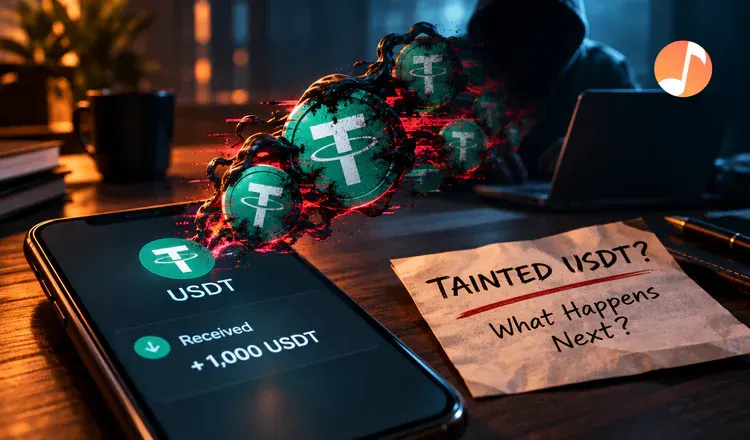
Tainted USDT is stablecoin that passed through a theft or a scam before it reached you. The first thing to know is that nothing happens automatically. The transfer confirms, the balance appears, nobody knocks on your door. The trouble starts later, at the moment you try to move the coins somewhere that checks - an exchange deposit, a swap, a cash-out.
What "tainted" actually means
Firms like Chainalysis and TRM Labs map the chain and score addresses by how few hops separate them from known theft and scam wallets. Exchanges buy those scores and run every deposit against them. So taint is a reputation attached to money, a bit like buying a secondhand phone whose serial number the police have flagged: it works perfectly until somebody scans it.
What an exchange does with a flagged deposit
Usually it credits the deposit and then holds it, with the account restricted while compliance asks where the funds came from. You will be asked for documents: who sent them, why, and what the trade was. Outcomes range from release in a few days to a hold lasting months, or a return of the funds to the sending address. A direct blacklisting of your own address by Tether is much rarer and generally needs you to be closer to the crime than one accidental payment.
What to do, and what not to
Stop moving the coins. Splitting them across wallets, running them through a swap or sending them to a mixer is the single worst reaction: it adds hops that look exactly like somebody hiding a trail, and it turns a plausible victim into a plausible suspect. Instead, save everything while it still exists - the chat with the counterparty, the advert, screenshots of the deal, transaction hashes, timestamps - and tell the exchange yourself before it asks. Volunteering is treated very differently from being caught.
The habits that prevent this are dull. Refuse peer-to-peer offers priced noticeably above market, insist on counterparties you can identify, and check the sending address before accepting a large payment. If your own address does end up blocked, the routes for challenging a freeze set out what is realistically possible.