
Transferred the Wrong Coin or Token to the Wrong Network Address? What Happens Next
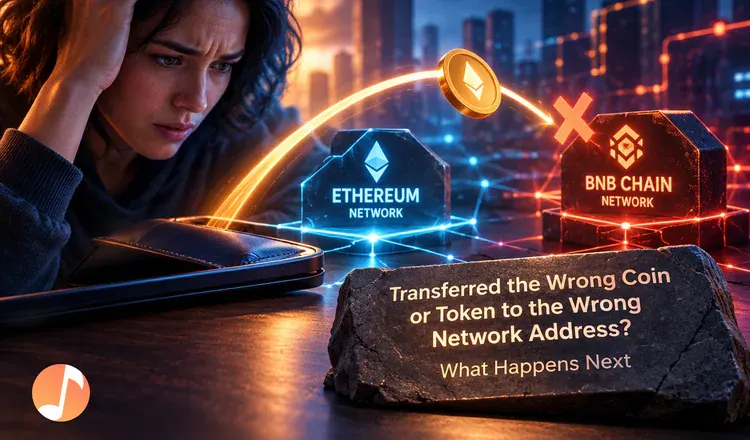
If you transferred the wrong coin or token to the wrong network address, the money is almost never floating in space. It is sitting at a real address on a real blockchain - just not the one you meant. Whether you get it back comes down to a single question: does anyone hold the key to that address on that chain? If the answer is you, recovery takes about ten minutes. If the answer is nobody, there is no way back.
Where did it actually go?
Most popular networks copy Ethereum's address format, so the same forty-two characters starting with 0x exist on Ethereum, BNB Smart Chain, Polygon and Arbitrum all at once. Think of it as the same street address in four different cities: the parcel was delivered, just in the wrong town. Paste your address into the explorer for the chain you actually used - etherscan.io for Ethereum, bscscan.com for BNB Smart Chain - and you will usually find the balance your wallet is not showing you.
When you can get it back
If that address came from a wallet that once showed you a recovery phrase - MetaMask, Trust Wallet, Ledger, Phantom - it is yours on every compatible chain, and nobody's permission is needed. Add the missing network in the wallet's settings, or import the same recovery phrase into a wallet that already supports it, then switch to that network. Two details trip people up. The token may not appear until you add it by hand using its contract address, and you need a small amount of the chain's own coin - BNB on BNB Smart Chain, ETH on Ethereum - to pay the fee that moves anything out.
When you cannot
Three endings are bad. The address belongs to an exchange, which only watches the networks it supports, so the decision is their support team's rather than yours. The address was a token contract rather than a person, in which case software holds the balance and only the issuer might be able to sweep it out. Or the address simply belonged to a stranger, because one character was wrong - and a stranger has no reason to answer.
The habit that prevents a repeat costs nothing: copy the destination from the receiving wallet's own receive screen, read the network name on both sides out loud, and send a tiny test amount the first time you use any address. If the funds went to an exchange, read how recovery on Binance works; for the wider picture, see recovering tokens sent to the wrong chain or address.