
How SIM Swaps Bypass 2FA, and Which Authentication Methods Actually Work
In short
How SIM swaps bypass 2FA, and which authentication methods actually work: why SMS codes follow your number, and what an app or a security key fixes.
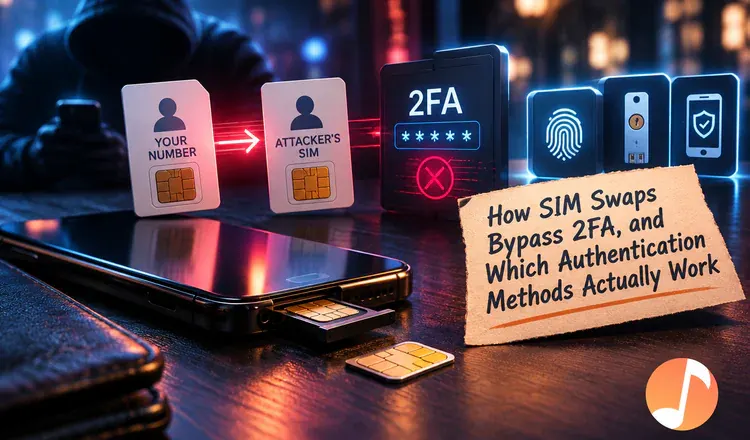
SIM swaps bypass 2FA because the most common second factor is not tied to you, or even to your phone — it is tied to your phone number. A code sent by text goes wherever that number currently points. Move the number onto another SIM and the second factor moves with it, intact and working. Methods that keep the secret on your device, or in a key in your pocket, simply do not have this weakness.
Why does SMS fail the moment the number moves?
Because the network decides where a text lands, not your handset. An SMS code is like a number read out at a hotel front desk: whoever happens to be standing there when it arrives hears it, and the desk has no way of telling whether that is the right guest. An authenticator app is more like a combination you memorised. Nothing is delivered, so there is nothing to intercept.
Which authentication methods actually work?
Three tiers, in rising order of safety. An authenticator app — Google Authenticator, Aegis, or the one built into your password manager — holds a secret planted on your device when you scanned the setup QR code, and works out a fresh six-digit code from it every thirty seconds, offline. A SIM swap cannot touch it. A hardware security key such as a YubiKey goes further: it signs in only to the exact website it was registered with, so a convincing fake page gets nothing at all. A passkey does the same job using the fingerprint sensor already in your phone or laptop.
What still gets past an app?
Real-time phishing. A fake exchange login can ask for your six-digit code and type it into the real site inside its thirty-second life. The code was fine; you handed it over. Only a security key or a passkey refuses, because it checks the web address itself instead of trusting the person reading it. That is why exchanges keep nudging large accounts towards keys.
If you change one thing this week, move your exchange account off SMS and onto an app — and save the backup codes offline before you do. Then read what two-factor authentication is and what SIM swap attacks are.