
What Is the GENIUS Act and Why Does It Matter for Stablecoin Users?
In short
What is the GENIUS Act? The US stablecoin law in plain English: 1:1 reserves, licensed issuers, no interest for holders, and the dates that matter.
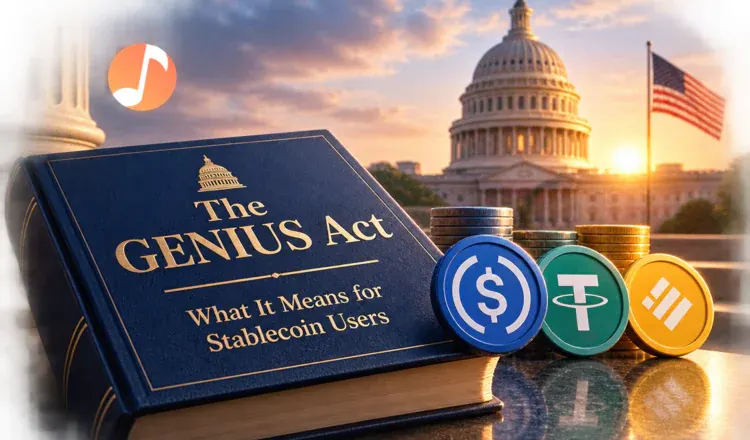
The GENIUS Act is the first United States federal law written specifically for payment stablecoins — tokens such as USDC or USDT that are meant to stay worth one dollar. It was signed on 18 July 2025 and takes effect on 18 January 2027. In short: anyone issuing a dollar stablecoin to Americans will need a licence, must hold safe assets worth at least every token issued, and may not pay holders interest on them.
What the law asks of an issuer
Think of it as the difference between a cloakroom and a casino. A cloakroom must still have your coat when you come back; it cannot lend it out overnight. The Act treats stablecoin issuers as cloakrooms. Reserves must at all times be worth at least the total of tokens in circulation, and they can only be held in a short list of safe things: cash, bank deposits, US Treasury bills maturing within 93 days, and similar. Issuers must publish what is in the reserve every month, and only approved issuers may issue at all — a subsidiary of a bank, a non-bank approved by the Office of the Comptroller of the Currency, or a company licensed under a state regime that meets the federal standard.
What changes for you as a holder
Three things. If the issuer fails, holders are first in line for the reserve rather than queuing with everyone else. The issuer must be able to freeze or destroy tokens when a court orders it, so a compliant stablecoin is never censorship-proof money. And the issuer cannot pay you interest for holding — any yield you are offered on a stablecoin is coming from somewhere else, usually a platform lending your coins out, with the risk that implies.
What has actually happened so far
The rules are being written now. The OCC issued its final rule on 21 October 2026, and other regulators have proposals open. No issuer can be approved before the law takes effect in January 2027. A later deadline, 18 July 2028, is the one that will visibly change exchanges: after it, a service provider may not sell a non-approved stablecoin to anyone in the US.
Nothing needs doing today, and nothing in your wallet changes overnight. The habit worth starting is checking who issues the stablecoin you hold and whether that issuer publishes reserve reports. Next: what stablecoins are, and how these rules compare with Europe's.