
What Is an Unstoppable Domain, and What Can You Do With It?
In short
What is an Unstoppable Domain? A crypto name you buy once and hold in your wallet — what it replaces, where it works, and what it cannot do.
An Unstoppable Domain is a crypto name sold by a company of the same name — yourname.crypto, yourname.nft, yourname.wallet. You pay once, there is no yearly renewal, and the name lands in your wallet as a token you own. Its everyday job is to stand in for a wallet address, so people send you crypto at a name instead of a 42-character string.
What you can do with one
Three things, in order of how often they are actually used:
- Receive crypto. Someone types your name into a wallet that supports it, and the payment goes to the address behind the name.
- Point it at a website stored on IPFS, a file network with no single host, so the page has no normal web hosting behind it.
- Sign in to apps that accept the name as a profile, the way some games and marketplaces do.
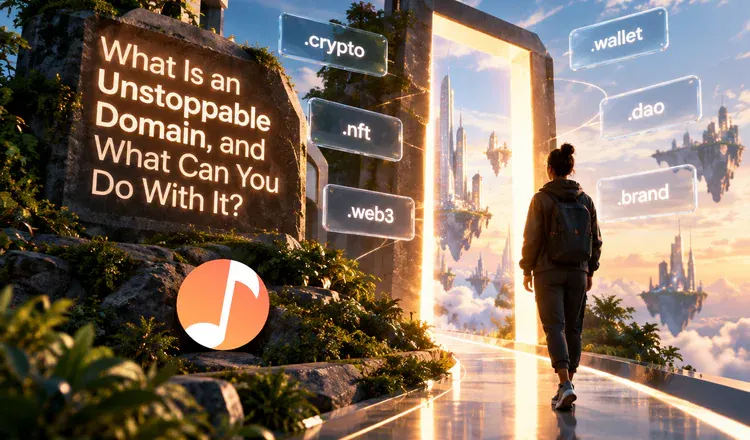
The endings on offer are its own: .crypto, .nft, .x, .wallet, .dao, .bitcoin, .blockchain and others. None of them exist on the ordinary internet.
What "buy once" really buys
The name itself sits on a blockchain — Polygon, a network built alongside Ethereum — so nobody can bill you yearly for it or quietly take it back. What a one-off price cannot buy is recognition. A name only works where software has chosen to read it. Brave and Opera handle these names in the browser; in Chrome or Firefox you need the company's extension. A good few wallets and apps support them, Coinbase Wallet and OpenSea among them, and plenty do not.
How it differs from ENS
ENS names end in .eth, live on Ethereum, are rented yearly rather than bought outright, and are the names most crypto apps read by default. The two systems are separate address books that do not consult each other: an ENS app will not resolve a .crypto name, and holding one does not reserve the matching .eth. Which you want depends less on price than on where the people paying you actually are.
Before you hand the name to anyone, test it: send yourself a small amount from the wallet or exchange you expect payments from, and see whether it even accepts the name. If it does not, give out the plain address instead. And remember a name proves nothing about who owns it — one character off a project's real name is the oldest trick there is. For the Solana and Ethereum equivalents, see everything you need to know before buying a .sol domain and how to register an ENS name for Farcaster.