
What Is DePIN in Crypto?
In short
What is DePIN in crypto? Decentralized physical infrastructure networks explained simply: real hardware, token rewards, and how Helium and Filecoin work.
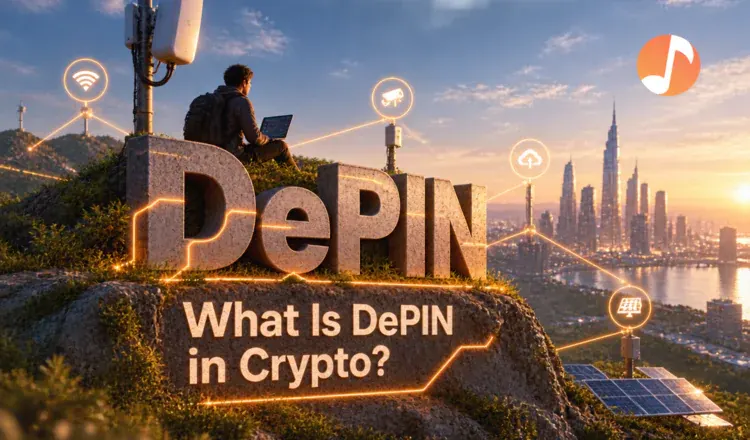
DePIN stands for decentralized physical infrastructure network. It means a network built out of real equipment owned by ordinary people — a radio antenna on a balcony, a spare hard drive, a graphics card, a dashcam — where the network pays the owners in its own token for the service their hardware provides. Instead of one company raising billions to build coverage, thousands of strangers each buy one small piece of it. The word was popularised by the research firm Messari in 2022, after other names for the same idea failed to stick.
How does paying strangers build infrastructure?
Picture a taxi company that never buys a single car. Drivers buy their own, the company matches them with passengers, and everyone is paid per trip. DePIN does that with equipment rather than cars. You buy the device, plug it in, and software checks that you really are providing the service — Helium calls its version proof of coverage, which confirms a hotspot is genuinely broadcasting where it claims to be. Do the work, collect tokens. The network sells the resulting service to customers, and that revenue is meant to eventually replace the token rewards.
What does it look like in practice?
Four examples cover most of the field:
- Helium — wireless coverage from small hotspots people run at home, now running on Solana.
- Filecoin — storage, where providers rent out disk space and must keep proving the files are still there.
- Render — computing power, matching people with idle graphics cards to studios that need rendering done.
- Hivemapper — street-level maps, built from dashcams in drivers' windscreens.
Why use a token at all?
Because of a chicken-and-egg problem. Nobody pays for patchy coverage, and nobody builds coverage without customers. A token lets the network pay the first wave of builders out of future value rather than today's revenue. That is also the risk: rewards per device usually fall as more people join, and whether the hardware ever pays for itself depends on a token price that can halve.
If a DePIN device tempts you, do the sum before you buy — assume the token is worth a fraction of today's price, and check whether paying customers actually exist, not just other miners. Next, read how token emissions work and how the same idea applies to AI computing.