
MiCA Stablecoin Interest Prohibition: Why EU Issuers Cannot Pay You Yield
In short
The MiCA stablecoin interest prohibition explained simply: what Article 50 bans, why Europe wrote it, and where stablecoin yield still comes from.
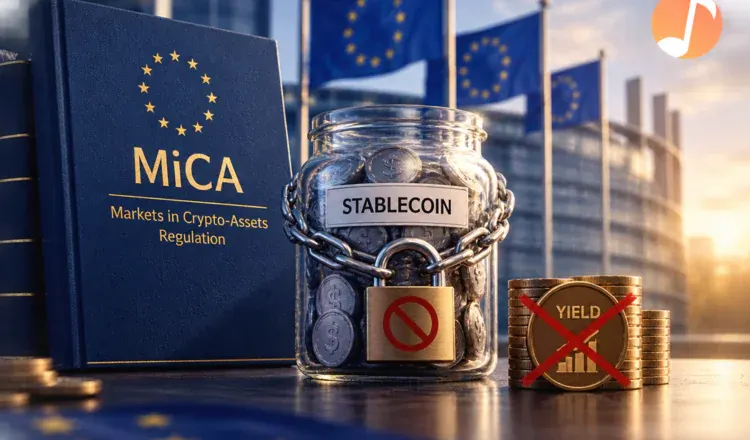
The MiCA stablecoin interest prohibition is the European rule that stops the company behind a stablecoin from paying you anything for simply holding it. It lives in Article 50 of the EU's Markets in Crypto-Assets regulation, which covers tokens pegged to one currency such as USDC and EURC, with a matching rule in Article 40 for tokens backed by a basket. Hold a euro or dollar token in Europe and the issuer owes you one euro or one dollar back on demand — and nothing on top.
Why would a rulebook ban paying people?
Think of a cinema gift card. It is worth what is printed on it, you can spend it whenever you like, and nobody expects the cinema to pay you for keeping it in a drawer. The moment it starts paying you by the month, it stops being a gift card and becomes a savings product — and savings products come with their own thick rulebook about capital, deposit protection and who is allowed to offer them. Europe's answer was to keep the two apart. A stablecoin is a way to pay, not a way to earn, and the rule counts any reward tied to how long you hold the token as interest, whatever it is called on the website.
Who the rule actually binds
Both the issuer and the crypto firms in the middle. Article 50 stops the issuer paying interest, and it stops exchanges and other EU crypto service providers paying it on those tokens either. That is why promotions inside the EU tend to be framed as cashback, points or limited-time rewards rather than a rate — and why regulators keep looking at whether those offers are interest wearing a different hat. In practice, Circle holds an electronic money institution licence in France and issues USDC and EURC there, and European holders get no yield from Circle for holding them.
Where stablecoin yield still comes from
Lending, almost always. If you supply USDC to a protocol such as Aave, borrowers pay to use it and that payment is your yield. Nothing in MiCA bans that, because the money is not coming from the issuer; it is coming from someone who borrowed your coins and might not pay them back.
So the useful question in front of any stablecoin return is simply: who is paying me, and what happens if they cannot? An issuer paying you in Europe would be breaking the rule; anyone else paying you is running a business with real risk attached. Next, see how Europe's rules compare with the US ones, or what the GENIUS Act asks of issuers.