
Decentralized AI Inference Network Explained: Who Does What
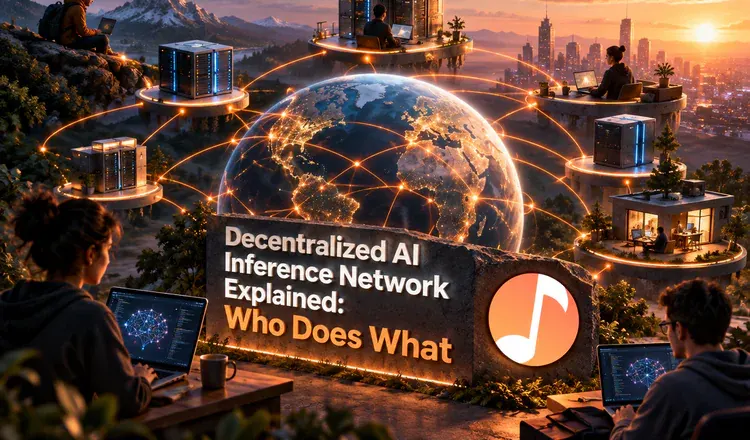
A decentralized AI inference network is a crowd of strangers' computers running AI models for whoever pays. Nobody employs them, so the network needs a way to hand out work, check it and pay for it automatically. Four jobs make that happen: the user who asks, the node that answers, the scorer who checks, and the chain that keeps the money honest.
Who are the four?
The user sends a request — a question, an image to describe, a document to summarise — and pays in the network's token. The node, usually called a miner, runs the model on its own hardware and returns an answer. The validator samples that work and scores it, because the user cannot judge whether an answer came from the model they paid for. The chain records the scores and pays out. Think of a taxi rank with an inspector: drivers compete for fares, an inspector rides along at random, and the fares are settled by a meter nobody can tamper with.
How does one request travel?
You send it to an endpoint that looks much like any AI provider's. Behind that endpoint, the network picks a node with the right model loaded, forwards the request, and streams the answer back. On Bittensor the busiest example is the Chutes subnet, which serves open models such as Llama and DeepSeek on demand; Targon does the same on hardware designed to keep the request private even from the machine's owner. On a raw compute marketplace like Lium or Akash, you rent the graphics card and run the model yourself — fewer middlemen, more work for you.
Who decides a node did good work?
Validators, and that is the fragile part. They send test prompts, compare results across nodes, and score whoever is consistent and fast. Nodes that score badly earn less and can lose their slot entirely. Validators have their own tokens staked, so scoring dishonestly costs them money. No part of this is perfect, but money is at risk on both sides of every judgement.
Before paying anything, send the same prompt to two different nodes and compare: honest networks give similar answers, and a wildly cheap one that does not is telling you something. Read what decentralized inference is first if that term is new, then how subnets get paid.