
Bid-Ask Spread and Slippage Explained
In short
The bid-ask spread and slippage are the two hidden costs of every trade. What each one is, why they grow, and how to pay less of both.
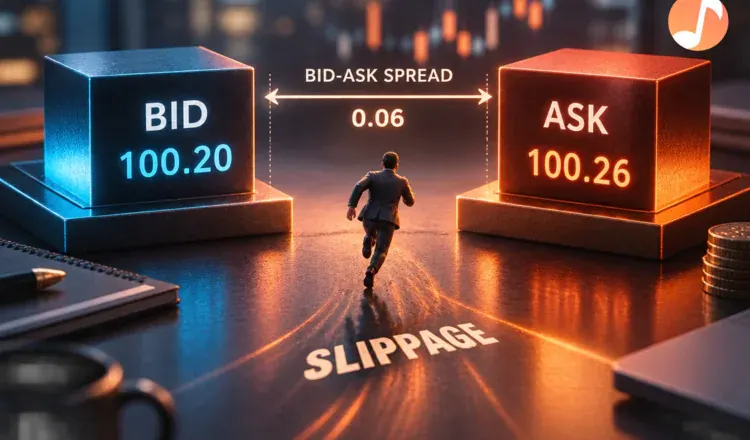
The bid-ask spread is the gap between the highest price anyone will pay and the lowest price anyone will accept. Slippage is what happens when your order is bigger than the offers sitting at the best price, so the rest of it fills higher or lower than you expected. Both are costs, and neither shows up as a fee on your receipt.
Where the spread comes from
A currency booth at the airport buys euros at one rate and sells them at a worse one, and lives on the difference. Market makers on a crypto exchange do exactly that: they post a bid and an ask at the same time and earn the gap for standing between buyers and sellers. The busier the pair, the more of them compete, and the thinner the gap gets. Bitcoin on a major exchange trades at a spread of a few hundredths of a percent. A freshly listed token might cost you 2% just to get in and out.
Why slippage bites
Say the cheapest ether on offer is $3,000, but only one coin is available there; the next seller wants $3,004, the next $3,010. Buy ten coins with a market order and you sweep through all three lines. Your average price is worse than the $3,000 you saw quoted, and that difference is slippage. It grows with your order size and shrinks with how much is on offer nearby. On Uniswap the same thing happens through the pool's formula, which is why the app shows you a slippage estimate before you confirm.
Paying less of both
- Use limit orders when you are not in a hurry — you set the price instead of accepting whatever is there.
- Split a large order into smaller pieces and let the book refill between them.
- Trade the pair with real volume. The same token often has a far tighter spread against USDT than against some obscure pair.
Before your next trade, compare the quoted price with what you actually paid. That gap is the real cost of the trade, and most people never look. To understand what causes it, read how an order book works and how to read liquidity and order book depth.