
Coins.ph Cuts Off Self-Custody Wallets Under the BSP Travel Rule
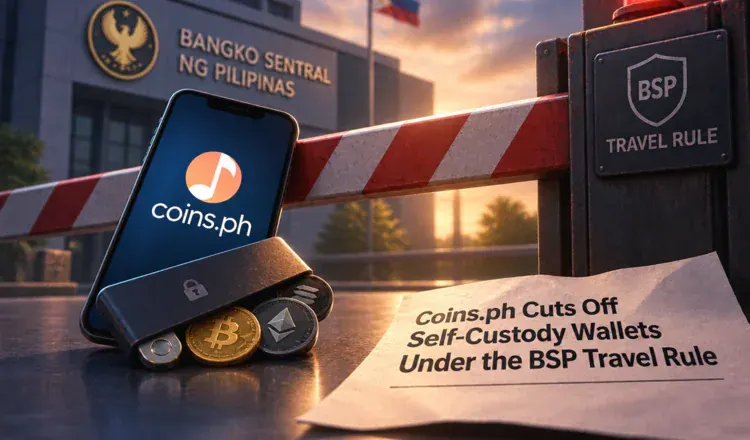
Coins.ph stopped supporting crypto transfers to and from self-custody wallets on 19 November. External transfers now run only between the Philippine exchange and accounts at other regulated venues, and each one carries the counterparty's full name, their platform, the wallet type and a stated purpose. No minimum applies. A withdrawal to a private wallet fails and the money stays put. A deposit from one is returned minus network fees. The company says the rules the Bangko Sentral ng Pilipinas sets require it.
What a transfer now carries
A self-custody wallet, also called unhosted, is one where the holder keeps the private keys instead of leaving them with a company. Those are the transfers that stopped. On withdrawals Coins.ph asks for the recipient's name, the destination address and platform, the wallet type and the purpose, releasing funds only once the details check out. Deposits sit pending until the account holder supplies the same information about the sender. Names must match the other platform's registration exactly, a legal name or a registered company name. Frequently used addresses can be whitelisted so the fields pre-fill. The requirements reach the Wallet OpenAPI endpoints too.
"These changes are required by regulation and help keep crypto transfers safe and transparent," Coins.ph told customers in the notice announcing the change.
The rules behind it
BSP Circular 1108, issued in 2021, brought the Financial Action Task Force's Travel Rule into Philippine supervision. Virtual asset service providers must pass originator and beneficiary details alongside a transfer. It applied at first to transfers of 50,000 pesos or more. Memorandum M-2023-042 went further two years later, telling providers to screen both sides against restricted-party lists, run due diligence on transfers involving unhosted wallets, and refuse a transfer when the minimum counterparty information is missing. None of that text says an exchange must stop serving private wallets outright. That step is the company's reading of what compliance takes. Supervisors across Asia keep writing the same obligations into statute, and Hong Kong published a bill licensing crypto dealers and custodians this week.
A dispute over who chose it
Not everyone accepts the company's framing. "Self custody is under attack in the Philippines," Ethan Rose of the payments firm Pouch wrote on X on 21 November, saying Coins.ph "blocks withdrawals to self-custody at the direction of the BSP". That last clause is his characterisation. The exchange's own notice claims only that regulation requires the changes, and the central bank has published no directive naming Coins.ph. Those are two different claims and nothing read here settles which is right. Wei Zhou, the exchange's chief executive, told BitPinas that both local and international platforms count as regulated venues, so a user can still reach a foreign exchange licensed in its own jurisdiction. That is wider than most accounts carried.
Supervision that was already running
The change lands on a company the central bank has been watching. Coins.ph runs on two licences held by two entities. Betur Inc. holds the virtual asset licence covering trading and custody, and DCPay Philippines Inc. holds the e-money licence behind peso balances and bank links. On 29 September an industry advisory implementing Monetary Board Resolution No. 839 partially suspended inbound InstaPay and PESONet transfers into DCPay, leaving outbound peso withdrawals, QRPh payments and Betur's crypto side running. Coins.ph said on 14 October that user funds were safe and denied knowingly serving offshore gaming operators, then told BitPinas on 16 October that all its licences remained active.
How much of the market this touches is not clear from the accounts available. Crypto Briefing puts the user base at about 18.6 million; no other outlet read here gives a number, and the local publication closest to the company gives none. No other Philippine exchange has been reported making the same cut. The country came off the task force's increased-monitoring list in February 2025 and faces its next mutual evaluation in 2027. That fixes a date, not an outcome. Regional supervisors have other projects running alongside, and Singapore issued S$100 million of tokenized bills settled in wholesale CBDC this month.
Read also: MoonPay Files for an OCC Trust Charter That Takes No Deposits