
Reading Order Books, Market Depth and Volume
In short
Reading order books, market depth and volume: what each number means, how they differ, and which one to trust before you place a trade.
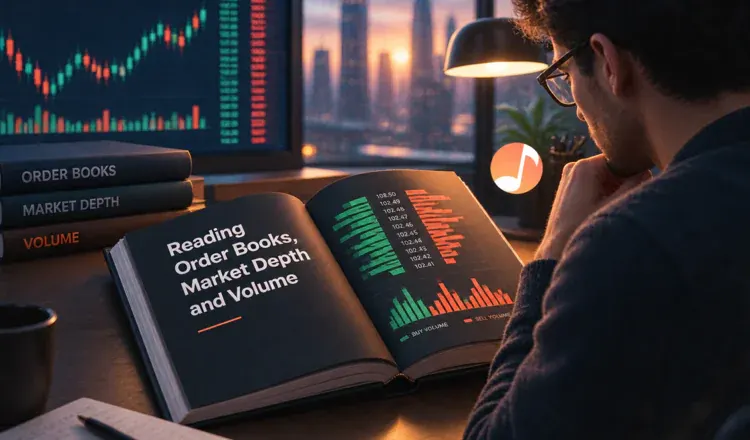
Three numbers, three different things. The order book is every offer waiting right now. Market depth is how much of that sits close to the current price. Volume is how much actually changed hands over a period. Beginners mix up the last two constantly, and the mix-up is expensive.
Depth is promises, volume is receipts
Depth is the queue at the counter: people saying they will buy or sell at a given price, who can walk away before they are served. Volume is the till roll at closing time — trades that really happened and cannot be taken back. A market can have a long queue and an empty till, or a short queue and a till full of receipts, and the two feel completely different to trade.
Reading them together
Thin depth with heavy volume means the market is turning over fast with nothing cushioning it — bitcoin in the minutes after a surprise announcement. Expect to be filled at a price you did not plan on. A deep book with almost no volume is the opposite: market makers are standing there quoting, but nobody is taking them on. Quiet markets like that can move sharply the moment one real order arrives.
Which number to trust for what
Use depth to estimate what your own trade will cost, because it shows the actual offers you will be hitting. Use volume, measured over days rather than minutes, to judge whether a market is real at all. Volume is the easier of the two to fake — smaller exchanges have been caught reporting trades that were really the same money going round in circles — so a token advertising enormous volume with almost nothing in the book within 2% of the price is telling you something about itself.
Next time you look at a coin, write down three figures: the spread, the dollars on offer within 1% either side, and the 24-hour volume. Any coin where those three do not agree deserves a second look. Then read how to read liquidity and order book depth and how to read the depth-of-market ladder.