
Jensen Huang Reportedly Weighs a Return to Nvidia After 33 Years
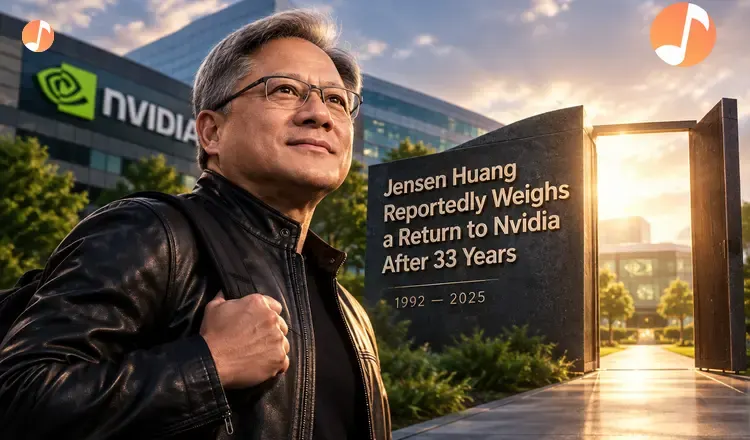
Jensen Huang is weighing a return to Nvidia, three days after leaving the chipmaker he co-founded in 1993. The Financial Times reported on Sunday that he has discussed a comeback with confidants, citing people familiar with the matter. Reuters carried the report the same day. The Next Web, publishing on Sunday evening, added that several Silicon Valley allies have begun lobbying the board on his behalf, two of them Nvidia investors. Neither account carried a response from Nvidia or from Huang.
What the company said when he left
Huang resigned on 12 November and gave up his board seat at the same time, ending a 33-year run as chief executive. Nvidia gave no reason for the departure. Colette Kress, chief financial officer since September 2013, took over on an interim basis while the board searches for a permanent replacement, and the company said it would weigh internal and external candidates. Harvey Jones was named chair, the first in Nvidia's history. The stock fell more than 14 percent at one point that Thursday before recovering part of the drop.
"Jensen's contributions to Nvidia are profound," the board said.
Who is lobbying the board
The two investors named in Sunday's reporting are Brad Gerstner of Altimeter and Gavin Baker of Atreides. They published a letter to the board on X that urged "a slow and deliberate approach" to choosing a successor, one that leaves room for "the potential return of Jensen Huang". That is a request, not a decision. The board has not said publicly whether it will consider one.
The distinction matters because every account of the comeback talks traces back to one Financial Times story. Reuters and The Next Web both cite it rather than sourcing of their own. We could not find a second original report by publication time.
The 33 years hold up
The figure travelling with the story is 33 years, and it checks out. Nvidia was incorporated on 5 April 1993 by Huang with Chris Malachowsky and Curtis Priem, on $600 of starting capital, and Huang was president and chief executive from the first day of operation. Al Jazeera, reporting the exit on 12 November, described a 33-year tenure as chief executive. The arithmetic from 1993 to 2026 agrees.
The company he left is not the one he started. Revenue grew from $4.13 billion in fiscal 2014 to $215.9 billion in fiscal 2026, and Nvidia is estimated to hold about 90 percent of the market for advanced AI chips, the processors that train and run large models. It passed $5 trillion in market value in October 2025, the first listed company to do so.
Crypto desks watch the same tape
Nvidia's results move crypto prices, which is why a leadership question there registers well beyond equities. Bitcoin fell to $75,463 on 6 November during a chip rout that set off $1.08 billion in liquidations. In September an AI warning that hit chip stocks pulled bitcoin toward $78,000. The correlation runs in both directions now, and a contested succession is one more thing that can move it.
Nvidia reports quarterly results on Tuesday, with Kress presenting them. Whether the board treats Sunday's lobbying as a live option, or closes the question before that call, is the next part of this that will be visible from outside.
Read also: CZ and Musk Join the Founders Backing Huang After His Nvidia Exit