
What Is the Bitcoin Whitepaper? The Nine Pages That Started Crypto
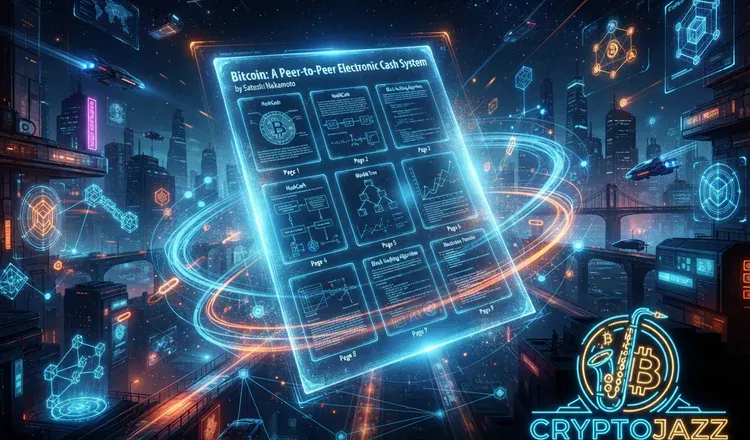
The Bitcoin whitepaper is the nine-page document that started all of this. Satoshi Nakamoto published it on 31 October 2008 under the title "Bitcoin: A Peer-to-Peer Electronic Cash System" and sent a link to a small mailing list of cryptography enthusiasts. It set out how people could pay each other directly over the internet with no bank in the middle. Two months later the software went live and the first block was mined.
What problem was it solving?
Digital things copy perfectly. Send someone a photo and you both have it, which is fine for photos and fatal for money. Before Bitcoin the only answer was a trusted company keeping the master list of balances, so that spending the same dollar twice was impossible. The whitepaper replaced that company with a public record kept by thousands of strangers at once, plus a deliberately expensive race to add each new page to it. Rewriting history then means outspending everyone else combined, which is what makes the record hard to cheat.
What is actually in the nine pages?
Less than most people expect, and it is more readable than it looks. After a short abstract come brief sections on transactions, on chaining blocks together with timestamps, on the mining race that decides who writes the next block, on how the network settles on the longest chain, and on why the people doing the work are paid. There is no company in it, no roadmap and no talk of price. The final pages are a piece of arithmetic showing that an attacker's chance of rewriting the record collapses as blocks pile up on top.
Why do people still read it?
Partly history, partly habit. It set a template that the whole industry copied: Ethereum began with its own whitepaper, written by Vitalik Buterin in 2013, and today almost every project publishes one. That is worth knowing, because a whitepaper is a claim, not a promise. Plenty are marketing brochures with equations added, and the document alone tells you nothing about whether the team can build the thing.
Read the original yourself. It is free, it takes about half an hour, and a copy ships inside the Bitcoin Core software. When you read some other project's whitepaper, look for what the system does that existing ones cannot, and treat promised returns or price charts inside it as a reason to close the tab. Read next: who Satoshi Nakamoto was and what the genesis block is.