
What Is a Memo or Tag in Crypto Transfers?
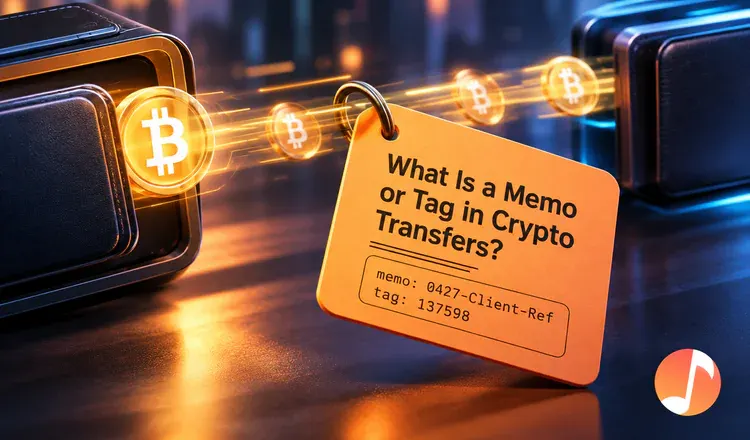
A memo or tag is a short code you add next to the address when you send certain coins, so the receiver knows which account the payment belongs to. It exists because some exchanges keep thousands of customers behind a single blockchain address. The address is the building; the memo or tag is the apartment number. XRP calls it a destination tag, while Stellar, Cosmos and TON call it a memo, and it is usually a run of digits or a short mix of letters and numbers.
Which coins use one?
The common ones are XRP, XLM on Stellar, ATOM on Cosmos, TON, EOS and HBAR. Bitcoin and Ethereum never use them, because each user gets a unique address there and there is nothing to tell apart. The rule that matters is simpler than any list: if the deposit screen shows a memo or tag field, that coin needs one on that platform, and if it does not, you leave it alone.
Where do you get yours?
From the receiver, never from your own head. Open the deposit page of the exchange or wallet you are sending to and it will show an address and a tag together. Copy both, one straight after the other, into the sending form. Do not invent a tag, do not reuse an old one from a different deposit, and do not put your name in the field. Sending to a personal wallet such as a Ledger usually needs no tag at all.
What happens if you forget it?
The transaction still succeeds on the blockchain, which is why the explorer shows it confirmed while your exchange balance stays empty. The platform received the coins but cannot tell whose they are, so they sit unassigned until support matches them by hand. That is recoverable in most cases, but it costs days and sometimes a fee.
Treat the address and the tag as one unit: copy them together, paste them together, and send a small test amount first when the sum is worth worrying about. If you have already sent without one, how to retrieve a deposit with a wrong or missing tag is the next step, and a blockchain explorer will confirm the payment arrived.