
Volume Profile Trading Guide: How to Use It Effectively
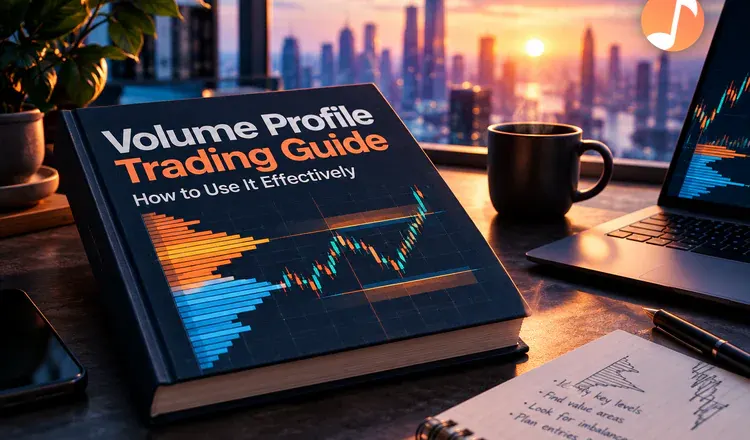
Volume profile turns a chart on its side. Instead of showing how much traded each hour, it shows how much traded at each price - a bar sticking out to the left or right for every level. Using it effectively is mostly about two decisions: which stretch of chart you measure, and what you do with the shape that comes back. Everything else is detail.
Choosing the range is the whole skill
A profile measures whatever you tell it to measure, so the range is the setting that matters. Pick something with a clear beginning: a sideways stretch between two prices, the move since a Bitcoin halving, the period since Ethereum's last upgrade. A range chosen at random gives a shape that means nothing, and a profile drawn over the entire history of a coin mostly tells you where it traded years ago. Short ranges are noisy; very long ones are stale.
Reading the shape
Three shapes cover most cases. A fat middle with thin ends is a market that agreed on a price and traded around it - a balance. A profile leaning to one end means the market spent most of its time there and moved away quickly from the rest. Two fat areas with a gap between them means the market agreed on one price, moved, then agreed on a new one; the thin gap is where it travelled fast. Those thin areas tend to be crossed quickly again, while the fat areas tend to slow price down.
Where the tool goes wrong
- The volume comes from one exchange's feed, so the same coin can look different on a small venue and a large one. Check the ticker.
- Perpetual futures and spot markets produce different profiles for the same asset. Pick one and know which you are looking at.
- A level does not become a floor or a ceiling because it is thick. It only tells you where the business was done.
Take one chart, draw a profile over a single obvious range, write down the two or three prices it highlights, and check next week whether the market noticed them. That habit teaches more than any indicator stack. For the companion tool, see volume profile and VWAP combos, or start further back with crypto volume analysis.