
How to Use Etherscan to Check Transactions
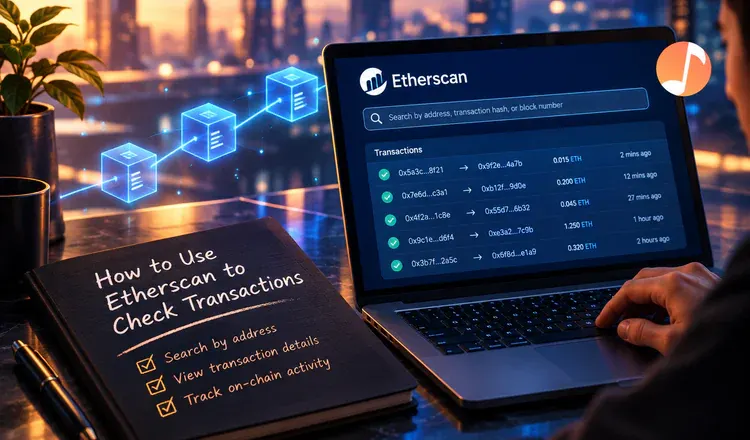
Etherscan is a free website that shows every payment ever made on the Ethereum network, and you use it by pasting a wallet address or a transaction code into the search box at the top. A second later you can see whether the payment went through, what it cost and where the money landed. There is nothing to install and no account to open.
How do you use Etherscan to check a transaction?
Every Ethereum payment gets a long code beginning with 0x, called the transaction hash. Your wallet hands it to you after you send something: in MetaMask, open the activity list, tap the payment and choose the option to view it on the block explorer, which opens Etherscan at exactly the right page. An exchange gives you the same code on the withdrawal receipt. Paste it in the search box and the whole story of that one payment is on a single page.
What do the fields on the page mean?
It reads like the tracking page for a parcel. Five lines carry almost all the meaning:
- Status - Success, Pending or Failed. A failed payment still costs a fee, because the network did the work before giving up.
- From and To - the sending and receiving addresses. Click either one to see that wallet's full history.
- Value - how much ETH moved. Token transfers such as Tether show on a separate line below.
- Transaction fee - what you paid the network, always in ETH, even when you were sending a token.
- Block and confirmations - which batch of payments yours joined, and how many batches have been added since. More confirmations means harder to undo.
Why look up an address and not just a payment?
Paste a wallet address instead and you get its balance, the tokens it holds and every transaction it has ever made. This is how you check whether a deposit actually arrived before messaging an exchange's support, and how you see when a token's contract was created. A project claiming a long track record from a contract that is three days old has told you something useful.
Save yourself the panic later: when a withdrawal looks stuck, check the hash on Etherscan before anything else, because a Pending payment is usually just a low fee waiting its turn. While you are there, read how to read a block explorer properly and how to check your token approvals.