
Philippine Central Bank Proposes a One-Year Payment License Freeze
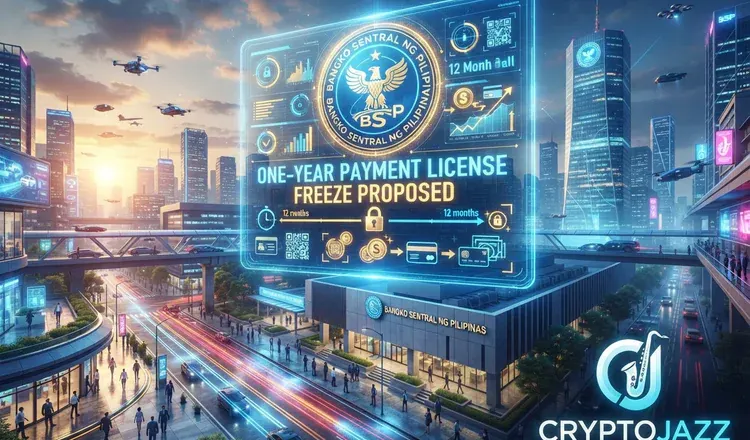
The Bangko Sentral ng Pilipinas wants to stop taking applications from new payment operators for a year. A draft circular reported on Monday would suspend acceptance and processing of registrations for the Operator of Payment System license, or OPS, while the central bank reviews the framework behind it. The same draft puts regulated crypto firms in a high-risk merchant bracket with casinos and money changers, and makes banks take them on directly. None of this is in force. The BSP is taking feedback, and no account reviewed here gives a deadline.
What the pause actually does
The freeze would run 12 months from the day the circular takes effect. Cointelegraph and the Philippine Star both filed it on Monday, and two other accounts match. Applications lodged before the suspension keep moving through evaluation, but the central bank would neither approve nor deny them until the year is up. That is the part with teeth. Firms would also be barred from starting OPS-regulated activity unless the BSP authorizes it separately. The stated reason is a holistic review of the OPS taxonomy and licensing framework. How many operators hold the registration today is in none of the accounts reviewed. The size of the frozen queue is unknown.
Crypto sits with the casinos
The draft's second half is about who a bank may acquire as a merchant. Regulated virtual asset service providers land in a high-risk category, and a bank that acquires them has to hold the merchant relationship itself, with no payment facilitator or aggregator in between. Enhanced due diligence, ongoing monitoring and risk-based caps on transaction value and total exposure come with it. The rule reaches firms authorized by the BSP, the Philippine Securities and Exchange Commission or another competent authority. That is wider than the central bank's own register. Pakistan opened VASP licensing in August on a comparable logic of naming the perimeter first.
What else sits in that bracket depends on which account is read. The Philippine Star lists casinos and gambling operators, gaming providers holding player funds, adult-oriented businesses, regulated VASPs and money service businesses. CryptoTimes, citing a proposed Section 1003, drops the gaming-funds entry. Crypto Briefing carries three categories only: gambling, regulated VASPs and money service businesses. The lists do not reconcile, and none says whether it quotes the full text or summarizes it. That section number appears in one account alone.
A merchant database on three clocks
Traceability is the through-line. The draft would build a National QR Code Merchant Database covering QR Ph payments, holding merchant identities, business registration, settlement accounts, owners and risk classifications. An interim repository is due within 90 calendar days, the full database within 12 months, and record migration within 15 months, on the Philippine Star's reading. Crypto Briefing gives the 90-day figure and stops. Material fraud, sanctions breaches, cybersecurity incidents and unlicensed activity would need notice within 24 hours and a full report within five business days. Firms running layered merchant arrangements get six months to review them and six more to fix them.
"A BSI authorized to engage in merchant acquisition shall not process or continue to process a transaction, where the merchant cannot be identified or where the transaction cannot be attributed and reconciled to the same merchant," the draft says, in text quoted by the Philippine Star.
BSI is the central bank's term for an institution it supervises.
The blanks in the document
This is a draft and it reads like one. The approval date and the Monetary Board resolution number are reportedly blank in the copy circulating, so the timetable is not set. Once finalized, the rules take effect 15 calendar days after publication in the Official Gazette or a newspaper of general circulation. A separate moratorium on new VASP licenses has run since September 2025, on one account no other outlet reviewed here corroborates. Two freezes at once would leave the market to the firms already inside it. Thailand went the other way last week when its regulator proposed opening overseas crypto derivatives to retail investors. The final circular is the next document to watch, and nobody has published when it lands.
Read also: BitGo Becomes the First Global Custodian Licensed in South Korea