
What Is Chainalysis and How Do You Avoid Being Traced by It?
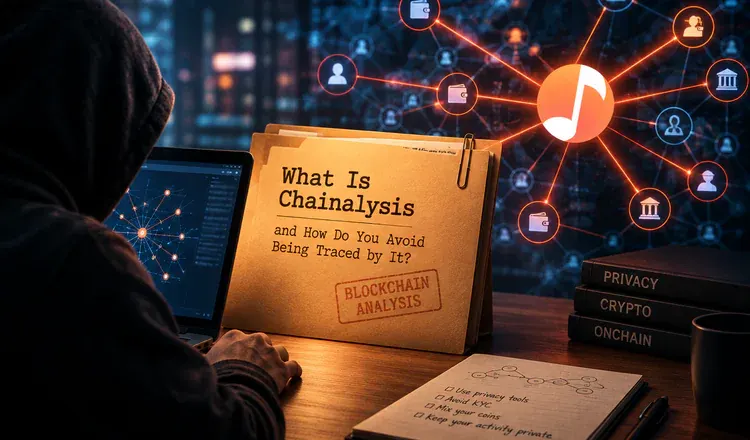
Chainalysis is a private company that sells software for reading public blockchains. Its customers are exchanges, banks, tax offices and police forces. It has no secret access to Bitcoin or Ethereum - it reads exactly the same ledger you can - but it organises that ledger into something searchable: scattered addresses grouped into single wallets, the big wallets labelled with company names, and the money drawn as a map an investigator can follow. You cannot hide from it the way you would hide from a camera. What you can do is stop handing it the easy links.
What the software actually does
Think of a blockchain address as a numbered locker in a glass-walled room. Anyone can watch what goes in and out; nobody knows whose locker it is until you tell them. Chainalysis works on that "until". It notices which lockers are opened together - if one payment is funded by five addresses at once, one person held all five keys - and merges them into a cluster. Then it attaches names to the clusters it can identify, usually big exchanges and services. The result is a diagram: this cluster paid that one, and that one belongs to a company with your passport on file.
Where the identifying links come from
Almost always from you, not from the maths. Reusing one receiving address for years ties everything together. Sweeping several small wallets into one proves they share an owner. Posting an address publicly, or pointing an ENS name at it, puts your handle beside it forever. And every withdrawal from an exchange that verified your identity creates a permanent link between a name and an address.
What sensible privacy looks like
Nothing exotic. Let your wallet generate a fresh receiving address for each payment instead of reusing one - MetaMask and Ledger both do this by default for Bitcoin. Keep separate wallets for separate purposes, so a donation address does not share a cluster with your savings. Do not publish an address next to your real name, and remember that a public ENS name is a name.
One practical note: none of this is about hiding from the law, and treating it that way leads people straight into "privacy services" that are simply thefts with a landing page. It is ordinary hygiene, the same reason you would not post a bank statement. For the mechanics underneath, see how Chainalysis tracks wallet addresses and de-anonymizing Bitcoin.