
De-anonymizing Bitcoin: How a Public Ledger Points Back to People
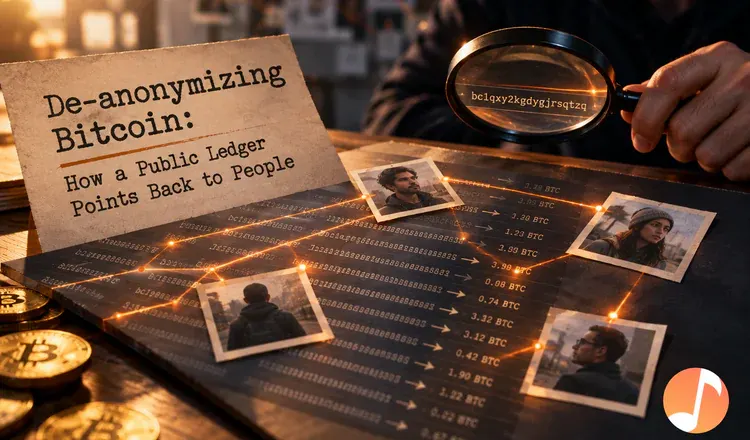
Bitcoin was never anonymous. Every transaction that has ever happened is published, permanently, for anyone to download - amounts, timestamps and addresses, all of it. What the ledger does not contain is names. De-anonymizing Bitcoin means closing that one gap: taking an address and working out which person stands behind it, using clues the ledger does hold plus information from the ordinary world.
Why the ledger alone gets you most of the way
Addresses are not isolated. They spend together, which shows common ownership; they receive change, which links the new address back to the old; and they repeat, because most people reuse an address they have already shared. Software follows these links until a scatter of addresses becomes one wallet with a history. At that point an investigator does not know who you are, but they know everything that wallet has ever done, and they can wait.
The last step is almost never technical
The link to a name usually comes from somewhere else entirely. An exchange account with identity documents behind it. A delivery address for something bought with the coins. An address pasted in a public profile or a forum post years ago. Amounts and timing that match a known payment. One careless connection is enough, and because the ledger is permanent, a slip made in 2019 still links a wallet today.
A real example
When around 120,000 BTC was stolen from the Bitfinex exchange in 2016, the coins sat visible on the chain for years. Investigators followed the trail through exchange accounts and other services until it led to two people, and the funds were seized in 2022. Nothing was decrypted. The ledger had recorded everything; the work was matching it to records held off-chain.
The practical takeaway is small and worth doing: treat an address like a bank statement you are about to publish, use a fresh receiving address for each payment, and never post one beside your real name. For the tooling side of this, see how Chainalysis tracks wallet addresses, and for the official side, how governments deanonymize crypto transactions.