
What Is a Satoshi? The Smallest Unit of Bitcoin
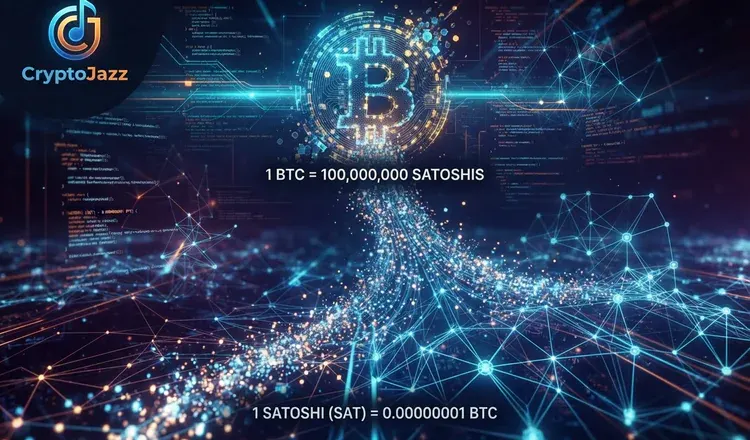
A satoshi is the smallest piece of a bitcoin you can send: one hundred-millionth of a coin, written 0.00000001 BTC. It is named after Satoshi Nakamoto, the person or group who created Bitcoin. Because a whole bitcoin is expensive, almost nobody buys one outright, and most people who own bitcoin really own some number of satoshis. Wallets increasingly show balances that way, and shorten the name to sats.
Why does Bitcoin need such tiny pieces?
Think of a dollar split into cents. A hundred cents is enough for a dollar, because a dollar does not change much from year to year. Bitcoin was built with a supply capped at 21 million coins, so what one coin is worth has room to move a very long way. If the smallest unit were a whole coin, small payments would be impossible. Splitting each coin into 100 million satoshis leaves room for them whatever happens. The split was there from the first day: the software has always counted in satoshis internally, and the "bitcoin" on your screen is just a friendlier way of displaying that number.
Where will you meet satoshis?
In more places than you would expect. Bitcoin fees are quoted in satoshis per byte of data, which is why a fee looks like a small whole number rather than a sum of money. The Lightning Network, a faster layer built on top of Bitcoin for everyday payments, works almost entirely in satoshis and splits them further into thousandths for its own accounting. Many wallets let you flip the display between BTC and sats, and "250,000 sats" is much easier to read at a glance than "0.0025 BTC".
Do other coins have satoshis?
They have their own version of the same idea. Ethereum's smallest unit is the wei, and one ether contains a quintillion of them. The unit you actually see is the gwei, a billion wei, which is how MetaMask and every block explorer display gas fees. Every serious crypto divides into small units, for exactly the reason Bitcoin does.
One habit worth building: before you type an amount, check which unit the box is expecting. Entering 100,000 in a field set to BTC rather than sats is the kind of mistake with no undo button, so run a small test transaction the first time you use any new wallet. Read next: why there will only ever be 21 million bitcoin.