
What Is a Block Explorer? How to Look Up Any Crypto Transaction
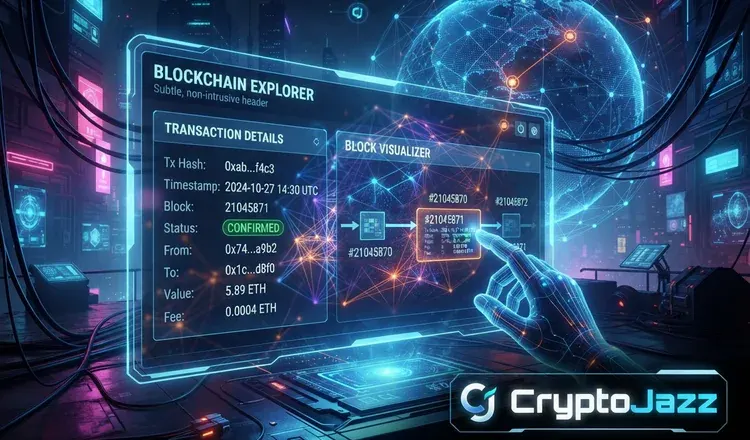
A block explorer is a free website that lets you look up anything on a blockchain: any transaction, any address, any block. Because the record is public, you need no account and nobody's permission. Etherscan does this for Ethereum, Solscan for Solana, and several sites do it for Bitcoin. It works rather like a parcel tracker — you paste a reference number and watch where the payment is.
What can you look up?
Start with a transaction. Every time you send crypto, your wallet gives you a long string of letters and numbers called the transaction hash. Paste it into an explorer and you will see whether the payment is still waiting, how many confirmations it has, what fee it paid, and which addresses it moved between. You can also paste an address instead, and see its balance and its entire history, or open a token and see how many people hold it and when it was created.
Why is it worth learning?
Mostly for safety and for peace of mind. A screenshot of a payment proves nothing, because screenshots are trivially faked; a transaction on an explorer is the actual record. If a transfer seems to have vanished, the explorer will usually show it sitting unconfirmed rather than lost. And before you buy a token, you can check that the contract address matches the one on the project's own site, which is the simplest defense against the fake copies of popular tokens that circulate constantly.
What it will not tell you
Names. Addresses are strings of characters, not people, and although explorers label well-known exchanges, most addresses belong to nobody in particular as far as the site knows. It also does not judge anything: seeing a token in your address does not mean it is real or yours to sell, since strangers can send unwanted tokens to any address they like.
Try it once with nothing at stake: paste your own wallet address into an explorer and look at your own history. Bookmark the real site while you are there, because fake explorers exist and they exist to collect your seed phrase — no explorer ever needs one. Related: how the blockchain ledger keeps score and what a public key is.