
What Does Burning Crypto Mean? Coins Sent to a Dead Address
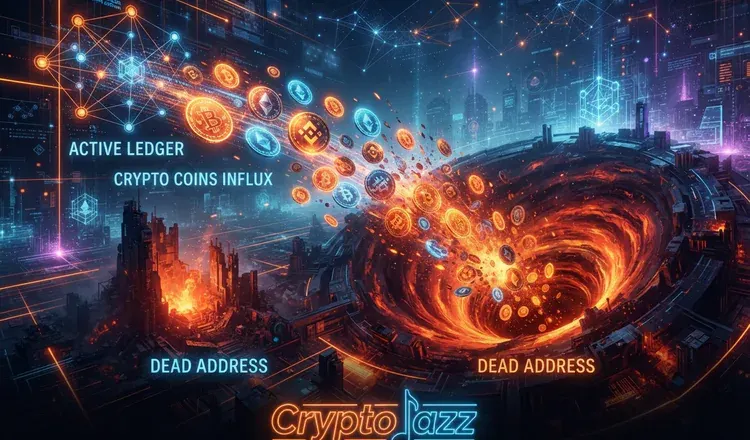
Burning crypto means destroying coins on purpose, so the supply gets smaller. Since nothing can be deleted from a blockchain, the coins are not erased — they are sent to an address that nobody has the key to, where they sit forever and can never move again. It is the digital version of a central bank shredding banknotes: the notes existed, they were counted, and now they are out of circulation for good.
How do you destroy something that cannot be deleted?
A blockchain is a permanent list of transactions, so the trick is to make coins unreachable rather than to remove them. Every crypto address is opened by a private key, and a burn address is one that was never created from a key at all — Ethereum's best-known one ends in the word "dead". Coins sent there are visibly stuck. Anyone can look the address up in a block explorer and see the pile growing, which is the point: a burn is a public, checkable act rather than a promise.
Who burns coins, and why?
Three common cases:
- Automatic burns. Since a fee change in 2021, Ethereum burns part of the fee on every single transaction instead of paying it to validators. On busy days that can destroy more ETH than the network creates.
- Scheduled burns. Binance has been burning BNB every quarter for years, working towards cutting the original 200 million coins in half.
- Bookkeeping. When someone hands a stablecoin issuer tokens back in exchange for dollars, the issuer burns those tokens so the count still matches the reserves.
Does a burn make a coin more valuable?
Not on its own, and this is where announcements get oversold. Fewer coins only matters if demand stays the same, and a project that burns one percent while issuing five percent more has a growing supply, not a shrinking one. Some burns are pure marketing: tokens a team was never going to sell get destroyed to produce a headline. The honest question is what happened to the total supply over a year, not how big the burn sounded.
If a project makes noise about a burn, check it yourself — burn transactions are public, and the total supply is listed on any ranking site. Compare the two dates rather than trusting the announcement. Related: why bitcoin's supply is capped and how transaction fees work.