
How to Track Crypto Whale Movements
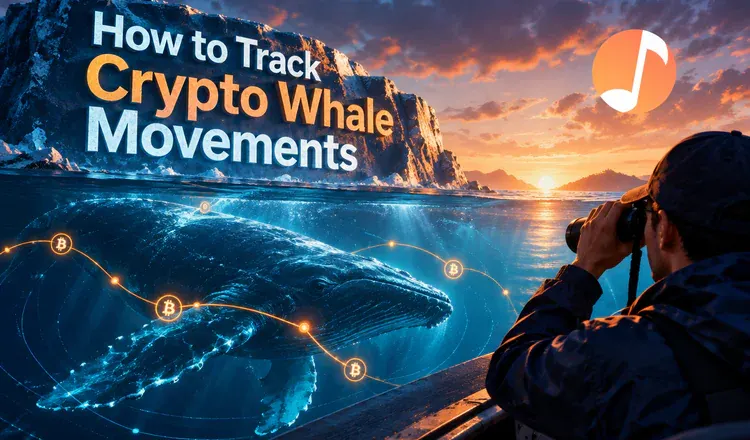
To track crypto whale movements you do three things: find the address of a very large wallet, put it on a watch list, and get a message when it sends or receives coins. None of this needs special access. Every transaction on Bitcoin, Ethereum and Solana is written on a public record that anyone can read. The hard part is not seeing the money move - it is working out what the move means.
Where do you find a whale address?
Start with a block explorer: Etherscan for Ethereum, Solscan for Solana, mempool.space for Bitcoin. Each one has a rich list showing the biggest holders of a coin, and each address is a clickable page with its full history. Many of those big addresses belong to companies rather than individuals - the cold wallets where Coinbase or Binance keep customer coins, or the vault behind a Bitcoin ETF. Services like Arkham Intelligence and Nansen add name tags to addresses, which is how analysts can say "this came from an exchange" instead of "this came from 0x3f2a...".
How do you follow one once you have it?
A block explorer will do it for free. Etherscan lets you add an address to a watch list and email you whenever it moves; a portfolio viewer like DeBank shows you everything one wallet holds on one page. If you want the news faster than email, a Telegram bot will push each transfer into a chat seconds after it confirms.
What does a big transfer actually tell you?
Less than the headlines suggest. Think of it like watching lorries leave a warehouse at night. You can count them and note where they are heading, but you cannot see inside. Coins arriving at an exchange are usually read as "someone is about to sell", yet the same move happens when a desk posts collateral, shuffles between its own wallets, or moves funds for a client. A transfer is a fact. The reason behind it is a guess.
A practical way in: pick two or three labelled wallets you can actually explain, watch them for a month, and write down what the price did after each move. Most of the time it will do nothing, and learning that early is worth more than any alert. Start with what a whale actually is.