
How to Find Support and Resistance Levels in Crypto Trading
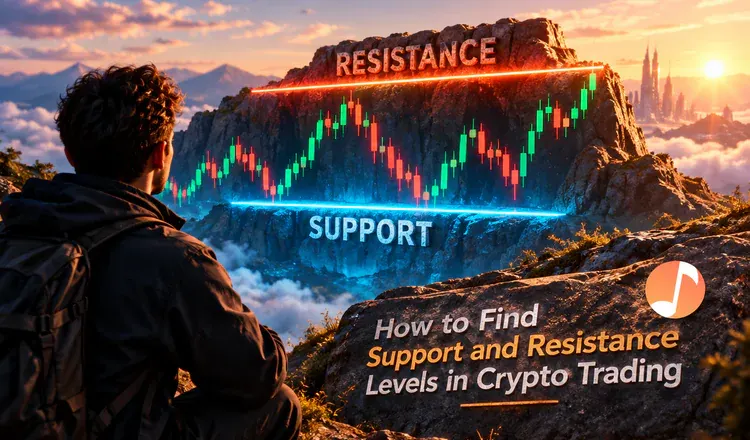
To find support and resistance levels in crypto trading you are looking for one thing: prices the chart has already turned at, more than once. Support is where the falls kept stopping, resistance is where the rallies kept stalling. You are not predicting anything - you are marking places the market has reacted to before, and they are visible on any free chart.
Where do you look first?
Zoom out before you zoom in. Open the weekly Bitcoin chart, then the daily, and look for the obvious turns: the tops of old rallies, the bottoms of old crashes, and the flat stretches where price went sideways for weeks. Those sideways shelves are the strongest levels, because a lot of coins changed hands there and a lot of people have a reason to act if price returns. Round numbers deserve a mark too - $100,000 on Bitcoin, $4,000 on Ethereum, $100 on Solana - simply because that is where humans put their orders.
Which timeframes matter?
Big timeframes make big levels. A price that turned the market three times on the weekly chart matters far more than one that turned it once on the five-minute. The practical habit is to find levels on the weekly and daily, then drop to the four-hour or one-hour only to time an entry near a level you already marked. Levels found on tiny timeframes break constantly, and chasing them is how beginners lose money slowly.
How do you know a level is real?
Ask three questions. Did price turn there more than once? Was there a sharp move away from it, not a lazy drift? And is it recent enough to still be in people's heads - a level from last month carries more weight than one from four years ago. Two out of three is usually enough to put a line on the chart.
Try it on one coin, not ten. Mark no more than five levels on the Bitcoin daily chart, write down why each one is there, and check them again in a week. The ones you cannot justify in a sentence are the ones to delete. Next: how to use the levels once you have them and how to draw them correctly.