
ERC-20 vs ERC-721 vs ERC-1155: What Each Standard Is For
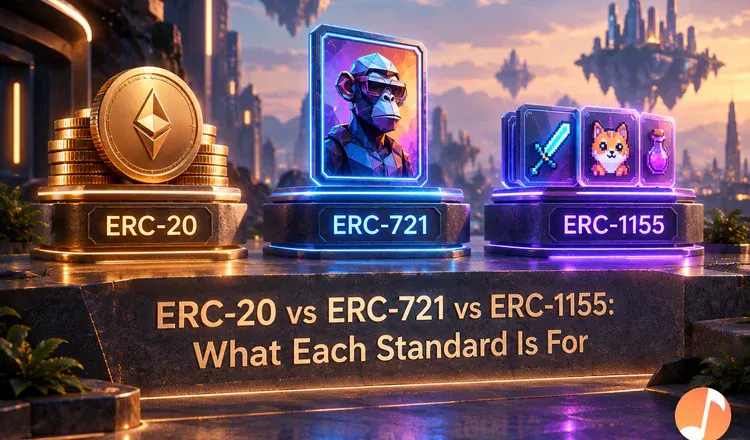
Three rulebooks, three jobs. ERC-20 is for tokens where every unit is identical and swappable, like Tether's USDT. ERC-721 is for tokens where every unit is unique and has its own ID, like a Bored Ape or an ENS name. ERC-1155 lets one contract issue many token types at once - some identical, some unique - and move several of them in a single transaction.
Interchangeable or one of a kind?
That is the whole question. Banknotes are interchangeable: your ten-dollar note and mine are worth the same, and neither of us minds swapping. Concert tickets are not: row A seat 1 is not row Z seat 44, even though both are tickets. ERC-20 handles banknotes, ERC-721 handles seats. ERC-1155 is the box office that sells both from one counter.
Where you meet each one
- ERC-20 - USDT, USDC, LINK, UNI, AAVE, and wrapped ether (WETH). Anything your wallet shows with a quantity and a price.
- ERC-721 - NFT collections, ENS domain names, and less obvious things such as a Uniswap v3 liquidity position, which is issued to you as a unique token.
- ERC-1155 - game items and multi-edition collectibles, where a contract may hold ten thousand identical potions and one unique sword side by side.
How do you tell which one you are holding?
A block explorer such as Etherscan tags every contract with its standard, and most wallets sort ERC-20 balances under "tokens" while putting the other two under "NFTs" or "collectibles". It is worth checking before you move anything, because not every tool handles all three: some older bridges and marketplaces support ERC-721 but not ERC-1155, and a wallet that shows a balance can still refuse to send it.
Before a first transfer of an unfamiliar token, look up its contract on an explorer and note the standard, then send the smallest possible amount as a test. The two deeper guides are what ERC-721 is and what ERC-1155 is.