
Review of the Sony A7R V
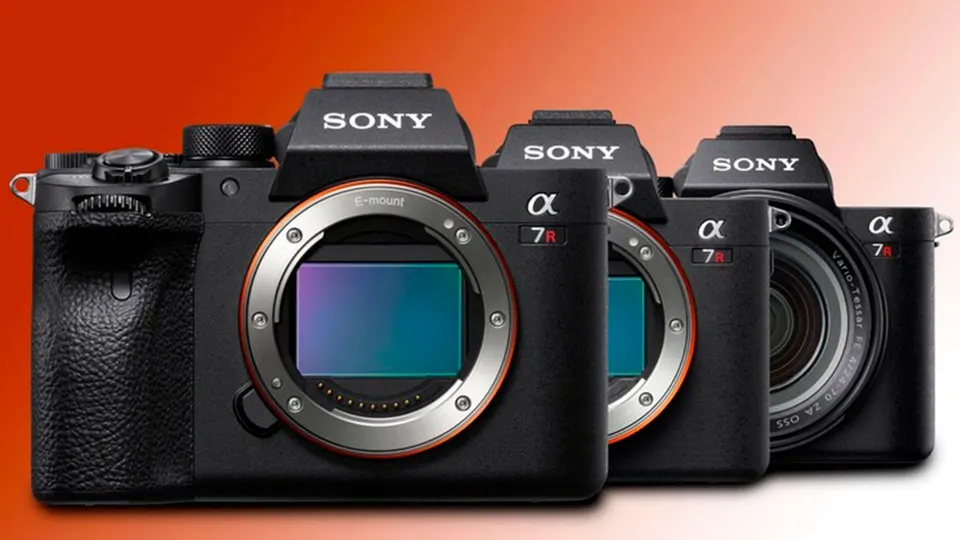
Sony has announced its new full-frame mirrorless camera, the Sony A7R V. The new Sony A7R V is equipped with an advanced display, an upgraded autofocus system, and Sony’s proprietary chip.
The Sony A7R V features a 60-megapixel full-frame CMOS Exmor R sensor with an ISO sensitivity range of 100 to 32,000, which can be expanded to ISO 50 and ISO 102,400.
The Bionz XR processor significantly enhances the camera’s menu system and enables complex algorithms (based on artificial intelligence) for exposure, white balance, focusing, and 10-bit video recording.
The A7R V offers a wider range of Raw file sizes (excluding the main uncompressed option), along with the ability to shoot large, medium, or small compressed files without quality loss. Additionally, there is a “Compressed” Raw option with minor losses.
The phase-detection autofocus sensor of the camera has 693 points, covering 79% of the image area, and it can focus down to EV-4. The Sony A7R V also has an improved stabilization system with a rating of 8.0EV.
The Sony A7R V can shoot at a speed of up to 10 frames per second in “compressed” Raw or JPEG modes. The buffer is capable of handling 583 “compressed” Raw files.
The A7R V model offers a high-resolution mode with pixel shift using a tripod, where 16 shots are taken and can be combined in the Imaging Edge Desktop software.
The A7R V camera features a built-in focus bracketing function, making it the only Sony camera to offer this feature.
The camera’s menu system has undergone noticeable changes compared to previous models, with settings arranged vertically in a tab format with subcategories that expand when the submenu is displayed.