
Solana — the New King of Stablecoins: Why $650 Billion in February Turnover Is Just the Beginning
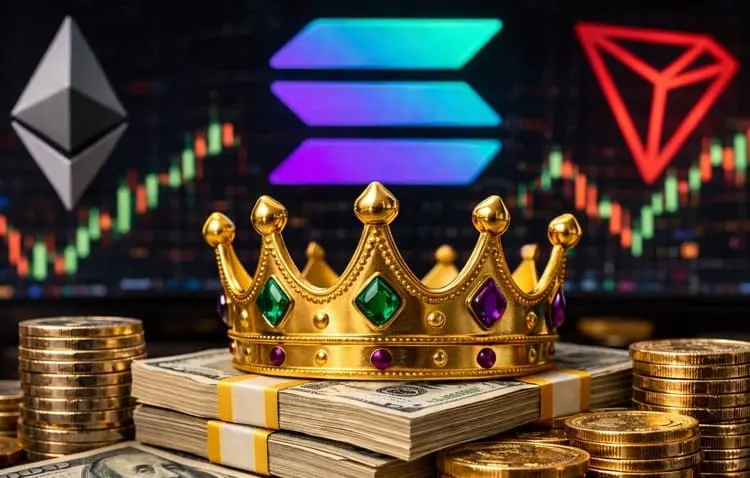
In March 2026, something happened that seemed impossible just a short time ago: Solana officially overtook Ethereum and Tron in stablecoin transaction volume. According to data as of March 9, Solana processed $650 billion in USDC, USDT, and other stable assets in February — more than ETH and TRX combined.
This isn’t a one-off spike. This is a change of power in the crypto settlement infrastructure.
Why Solana Became the Payment Monster
- Speed and Cost Comparable to Visa — but on Blockchain Average fee — $0.00025, confirmation under 1 second. On Ethereum (even with L2) it’s still more expensive and slower. For daily payments, transfers, microtransactions, the difference is massive.
- Institutional Payments on SOL Are Already Here Payments.org and other services launched in late 2025 – early 2026 use Solana precisely as a settlement layer. Large companies move millions in USDC/USDT in seconds without bank intermediaries. This is no longer about memecoins — this is real money.
- Volume Is Stable and Growing $650 billion in February is not luck. Solana has been surpassing ETH in stablecoin transactions for several months in a row. The network is simply faster and cheaper for what people do every day.
Connection to Kraken and FedWire (as we wrote on March 7)
Kraken received direct access to the Fed — these are the “rails”. Solana is the “high-speed express” racing along those rails. When stablecoin deposits/withdrawals become instant and almost free, and the network handles Visa-level volumes — we get a real alternative to traditional payment systems.
What This Means for the Average Person
Crypto payments become faster and cheaper than regular bank transfers.
- Stablecoins on Solana are no longer an experiment — they’re a real alternative to the dollar in the on-chain world.
- If you hold USDC/USDT, Solana may become the most convenient “home” for them.
Frequently Asked Questions (FAQ)
Why did Solana surpass Ethereum in stablecoin volume? Thanks to ultra-low fees (~$0.00025 per transaction) and confirmation speed under 1 second. This makes the network ideal for daily payments and transfers in USDC/USDT. Major payment services already use Solana as their primary settlement layer in 2026.
Is this a temporary pump or a long-term trend? Most likely long-term. $650 billion in February is not a one-time spike — it’s a sustained trend. Solana has been ahead of ETH in stablecoin transactions for several months. When technology catches up with volume, price and dominance lock in at new levels.
How is this connected to Kraken and FedWire? Kraken gained direct access to the Fed — these are the “rails”. Solana is the “high-speed express” running on those rails. Together they create infrastructure for instant, low-cost movement of stablecoins in the real world.
Should I move my stablecoins to Solana now? If you frequently transfer/pay in USDC/USDT — yes, it’s already more profitable in terms of fees and speed. But always check network risks (though Solana in 2026 demonstrates record stability). DYOR.
Can Solana overtake Ethereum in total market cap in 2026? Possible if stablecoins and payments continue to dominate. ETH is still ahead thanks to DeFi TVL and NFTs, but if Solana keeps its lead in stablecoin transactions ($650B+ per month) and ETH doesn’t accelerate with L2 and new upgrades, SOL could approach top-2. For now, this is speculation — watch active addresses and TVL metrics.
Crypto Jazz Editorial Take
While everyone argues who’s better — Ethereum or Solana — SOL quietly took the stablecoin crown. $650 billion in a month isn’t hype — it’s infrastructure that’s already working. We believe this is just the overture. When major payment systems fully switch to SOL rails, we’ll see the real concert.
Crypto changes rhythm every day. Stay in sync with Crypto Jazz — subscribe and follow the melody of the market! 🎺
Jazzman
Crypto Jazz Exploring how bricks and gold turn into tokens. DYOR is my main chord.
Important
This is not financial advice. Cryptocurrencies carry high risk of capital loss. Always conduct your own analysis (DYOR) and invest only what you are ready to lose.