
What Is Yield Farming in DeFi?
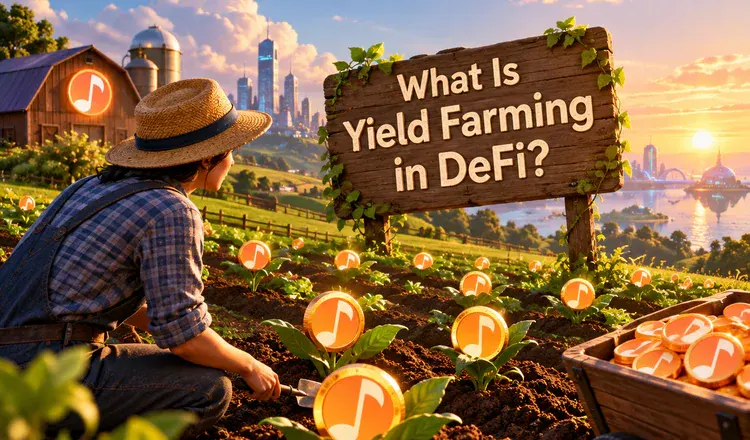
Yield farming is putting crypto you already own to work in DeFi apps so it earns more crypto. You deposit coins into a protocol — lending them out on Aave, or adding a pair of tokens to a pool on Uniswap — and in return you collect a share of the fees the protocol takes, often with extra reward tokens paid on top. Farmers move their money between apps chasing whichever rate is highest that week.
It is a lot like shifting savings between banks to catch the best introductory interest rate, except the bank is a piece of code, there is no deposit insurance, and part of the bonus is paid in the bank's own shares.
Where does the yield actually come from?
Three places, and they are not equally solid. Interest from people borrowing your coins is real income. So is your slice of the trading fees paid by everyone swapping against a pool you supplied. The third source is the one that produces the eye-watering numbers: a protocol printing its own new token to attract deposits. That is an advertising budget, not profit. It runs out, and the reward token can lose value faster than it is handed to you.
What can go wrong?
- The code fails. Your money sits inside a smart contract, and a bug or an exploit can empty it. Audits lower that risk; they do not remove it.
- The pair moves apart. When two pooled tokens change price against each other, you can end up with less value than if you had simply held them.
- The reward token sinks. A headline rate paid in a token nobody wants is a rate on paper only.
- Fees eat the gains. Every deposit, claim and exit costs gas, which can swallow the profit on a small position outright.
What should a beginner check first?
How long the protocol has been running and how much money other people trust it with, whether the advertised number is a plain rate or one that assumes constant compounding, and which of the three income sources it comes from. A rate that looks ten times better than everything else usually is not a discovery, it is a warning.
If you try it, start with an amount you would not mind losing, on a large protocol that has survived a few years, and revoke the token permissions you granted when you are done. Our guides to liquidity pools and total value locked cover the plumbing underneath.