
What Is Wrapped Ether (WETH) and How Do You Wrap It?
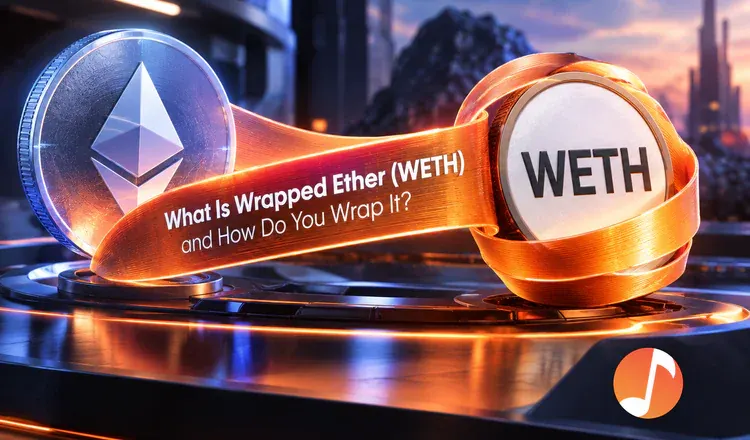
Wrapped ether, or WETH, is ordinary ETH in a standard token wrapper. One WETH is always worth exactly one ETH, and you can swap either way whenever you like. It exists because ETH, the native coin of Ethereum, came before the ERC-20 token standard and does not behave like the tokens that followed it - so apps wrap it to make it fit.
Why doesn't plain ETH work everywhere?
Every ERC-20 token - USDC, Tether, UNI - answers the same set of commands, including the one where you grant an app permission to move a set amount on your behalf. ETH itself never learned those commands. Rather than write two versions of every contract, developers made a deposit box: send it ETH, it hands you an equal amount of WETH, which does speak ERC-20. Think of an arcade where the machines only take tokens and the booth by the door swaps your coins one for one, both ways, all day.
How do you wrap it?
The easiest route is a swap. In MetaMask, or on Uniswap, choose ETH on one side and WETH on the other and confirm - the app routes it through the wrapping contract rather than a real trade, so there is no price to slip and no trading fee. Unwrapping is the same thing in reverse. Both directions cost a small amount of gas, and nothing else. You will often find apps doing it for you: sell ETH on Uniswap and WETH may appear in your wallet without you asking. It is not a different coin and it has not lost value.
What to watch out for
Keep some plain ETH aside. Gas on Ethereum is paid in ETH, and WETH cannot pay it - wrapping every last coin is a classic way to strand yourself. Be careful with lookalikes, too: anyone can deploy a token called WETH, so if a site offers you one, check the contract address against a block explorer before approving anything.
If wrapping still feels odd, the thing it is fitting into is the subject of our introduction to ERC-20 tokens, and wrapped tokens turn up again inside yield vaults, which have their own rulebook in what ERC-4626 is.