
What Is the sat/vB Fee Rate? Bitcoin Fees Explained by Size
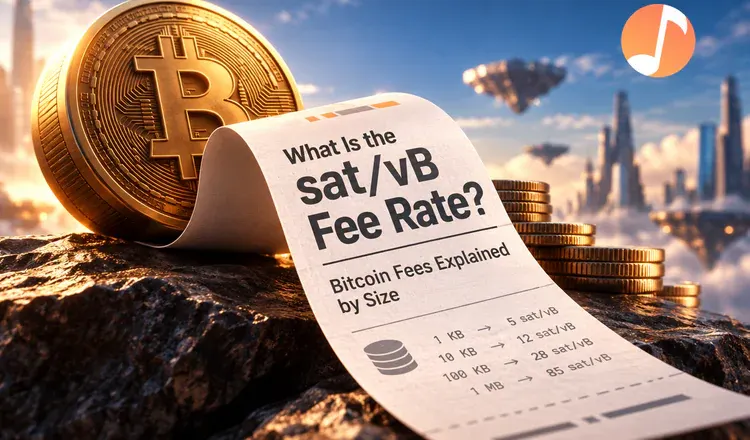
The sat/vB fee rate is the price you offer for each unit of space your transaction takes up inside a Bitcoin block. "Sat" is a satoshi, the smallest piece of a bitcoin — one hundred millionth of one. "vB" is a virtual byte, the way Bitcoin measures how much room a transaction occupies. So 10 sat/vB means you are offering ten satoshis for every virtual byte you use.
Why price by size and not by amount?
Because a block is limited by space, not by value. Around one million virtual bytes fit into each block, whether that block moves five dollars or fifty million. A miner filling that space wants the most revenue per byte, so size is the thing being sold. Sending a small amount and sending a fortune can cost exactly the same, because they take the same room. It is closer to posting a parcel than to a bank transfer: the postage depends on the box, not on what is inside it.
How to work out what you will pay
Multiply the rate by the size. A simple modern transaction with one input and two outputs is roughly 140 virtual bytes, so at 10 sat/vB it costs about 1,400 satoshis. Two things make that size grow: the number of inputs — the separate chunks of coin your wallet has to spend — and the address type. Older addresses beginning with 1 are bulkier than the newer bc1 ones, which is why a wallet upgraded to native SegWit quietly pays less at the same rate.
Which rate should you pick?
Whatever is currently enough for the next block or two if you are in a hurry, and something well below that if you are not. The number is never fixed: it can be a couple of sat/vB on a quiet weekend and many times higher during a rush. The fee tiers shown on any queue explorer tell you what each level buys today.
Worth trying once: send a small test amount at a low rate and watch how long it takes to confirm. You will learn more in one afternoon than from any table, and you will know what the mempool is doing next time it matters.