
What Is a Machine-to-Machine Payment Protocol in Crypto?
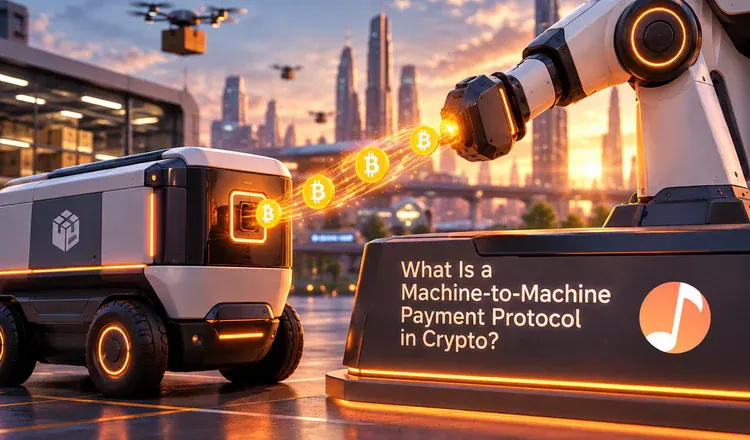
A machine-to-machine payment protocol is an agreed way for one piece of software to pay another with no person at the checkout. In crypto it usually means a program with its own wallet sending a small stablecoin payment to a server, a device or another program, automatically, as part of getting a job done. No card, no invoice, no login - just rules both sides already follow.
What makes machine payments different?
Four things that human payment systems handle badly:
- Size. Amounts are often a fraction of a cent, well below what a card fee allows.
- Finality. The payment has to clear now and stay cleared, with no chargeback six weeks later.
- No onboarding. A program cannot fill in a sign-up form or pass an identity check at three in the morning.
- Volume. Thousands of payments an hour, each one tiny and dull.
A blockchain transfer fits that shape in a way a bank transfer does not, which is why these protocols ended up in crypto first.
What do they look like in practice?
x402, published by Coinbase, is the best known: a server answers a request with a price, the program pays in stablecoins, the server hands over the data. Stripe has its own machine payments protocol doing a similar job on ordinary card rails. Physical hardware uses the idea too - networks where a wireless hotspot, a charger or a sensor earns small automatic payments for the service it provides, settled on a chain such as Solana.
What can go wrong?
Overspending, mostly, rather than theft. A program stuck in a loop can buy the same thing ten thousand times before anyone looks, and crypto payments do not reverse. Keys are the other weak point: a wallet sitting on a server is readable by anyone who gets into that server, and a hardware wallet like a Ledger cannot help, because the whole premise is that nobody is there to press the button.
The practical rule, if you ever hand software a wallet: treat it like a petty-cash tin rather than a bank account - a small float, topped up on purpose, with a daily cap you actually check. Read agentic payments explained next, and how agents pay onchain for the mechanics.