
What Is a Crypto Bridge? Moving Coins Between Blockchains
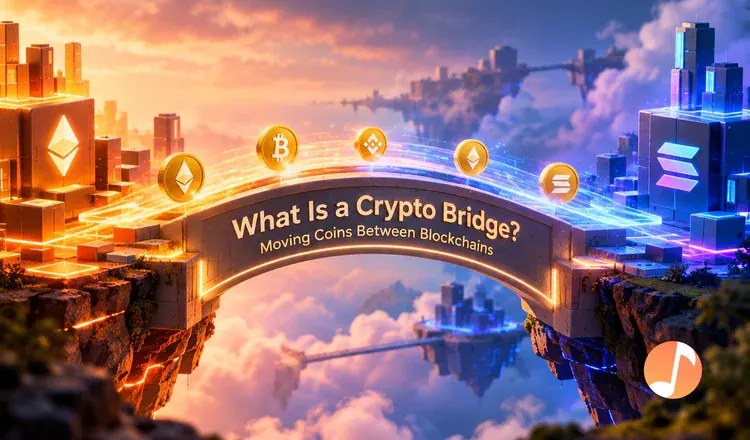
A crypto bridge is a tool that moves value from one blockchain to another. Blockchains cannot talk to each other on their own. Bitcoin keeps its own record, Ethereum keeps a separate one, and neither knows the other exists. A bridge works around that: it locks your coins on the chain you are leaving and gives you a matching token on the chain you are arriving at, so the amount in circulation never changes.
What actually happens to your coins?
Think of a cloakroom. You hand in your coat and get a numbered ticket. The ticket is not the coat, but everyone in the building treats it as good for one coat, and you can swap it back at the end of the night. Most bridges work the same way. Your original coins sit locked in a smart contract on the first chain, and the bridge issues a wrapped token on the second chain that stands in for them. Send the wrapped token back and the originals are released. Wrapped bitcoin on Ethereum is the best-known example: real bitcoin held aside, a token on Ethereum that tracks it.
Why would you use one?
Mostly to escape fees. Moving ether from Ethereum to a cheaper network such as Arbitrum or Base can turn a costly swap into a few cents, and apps like Uniswap and Aave run on several chains at once. Each big network has its own official bridge, linked from its own website, and there are third-party bridges that cover many chains. The official one is usually the safer default.
Why are bridges the riskiest part of crypto?
Because all those locked coins pile up in one contract, which makes a bridge a very large target. The Ronin bridge lost about 625 million dollars in 2022, Wormhole about 325 million, and Nomad roughly 190 million. Add the everyday traps — fake bridge websites, and arriving on a new chain with no coins to pay the fee — and it is the step where beginners lose the most.
If you bridge, start from the chain's own site rather than a search result, bookmark the page, and send a small test amount before the real one. Make sure you hold a little of the destination chain's coin for fees, or your funds will land somewhere you cannot move them from. Our guides to layer 1 and layer 2 and interoperability explain why so many chains exist in the first place.