
What Are Homoglyphs and Lookalike ENS Names?
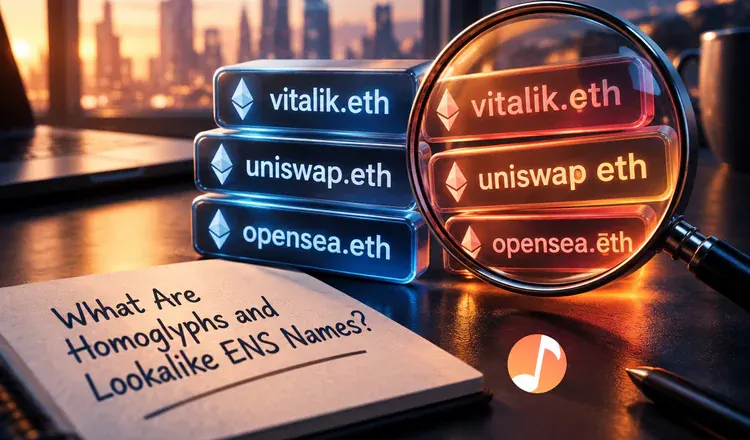
A homoglyph is a character that looks like another character but is not the same one. There is a Cyrillic letter that draws exactly like the Latin "e", and on a screen you cannot tell them apart - yet a computer treats them as two entirely different things. That matters for ENS names - the readable labels like alice.eth that stand in for a 42-character Ethereum address - because a name and its lookalike are two separate registrations, with two different owners and two different wallets behind them.
Why a lookalike name is dangerous
Think of a counterfeit banknote that is a perfect copy except for one digit in the serial number. Nobody checks the serial number. A scammer registers the lookalike of a project everyone trusts, posts it under a real announcement asking for payment, and the money arrives in their wallet instead of the project's. Nothing reverses it: once the transaction confirms, ENS support cannot claw it back, and neither can MetaMask nor the exchange you sent from.
Which characters get used
ENS sorts them into a few families:
- Invisible characters - a zero-width joiner slipped between letters, or a variation selector after one, drawing nothing at all.
- Cross-script confusables - Cyrillic, Greek or Armenian letters that match Latin ones.
- Small capitals - a tiny capital standing in for an ordinary lowercase letter.
- Swapped digit sets - an Arabic-Indic numeral where you expect a plain 4.
What already protects you, and what does not
The ENS app stops you creating an invalid name: it strips variation selectors, lowercases capitals and blocks many lookalike characters. It cannot stop someone else registering one directly through a contract or a third party. Marketplaces and explorers such as OpenSea and Etherscan add a warning triangle or an asterisk to any name holding unusual characters - though that flag means "unusual", not "scam", since a genuine emoji name trips it too.
Build one habit. When a name arrives in a message, type it into the search bar of the ENS app yourself instead of pasting it - pasting carries whatever hidden characters came with the message - then check that the wallet address it resolves to is the one you expect. Next: the other common ENS scams and how to protect a name you own.