
What Are Gas Fees?
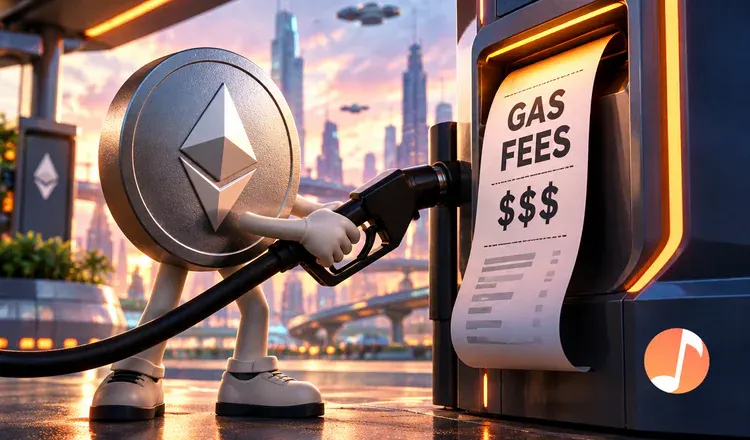
A gas fee is what you pay the computers that run a blockchain to process your transaction. Every transfer, swap or deposit takes real computing work, and the fee is what buys it. On Ethereum you pay it in ETH, on Solana in SOL; on Bitcoin the same idea is simply called the transaction fee. It goes to the network itself, not to the wallet or the app you are using.
Think of postage. What is inside the envelope is yours, but somebody still has to carry it, and a next-day stamp costs more than a second-class one.
Why does a network charge at all?
Block space is limited. Only so many transactions fit into each block, and without a price anyone could flood the network with junk for nothing. The fee does two jobs at once: it pays for the work, and it sorts the queue when more people want in than will fit.
What makes gas fees go up and down
Demand, mostly. On Ethereum the fee has two parts - a base fee the network sets automatically and pushes up when blocks are full, plus a small tip you add to be picked up sooner. A busy hour can cost several times a quiet one for exactly the same transaction. Complexity matters too: sending ETH is cheap, a swap on Uniswap costs more because far more work is involved, and a crowded NFT mint costs more again.
How to pay less
Three things help, roughly in order of how much they save. Use a layer-2 network such as Arbitrum or Base, where the same swap often costs cents rather than dollars, or a chain like Solana where fees are a fraction of a cent by design. Wait for a quieter moment if nothing is urgent - weekends and early mornings are usually cheaper. And batch what you can: one larger transfer beats five small ones, because each one pays its own fee.
Keep a small amount of the network's own coin spare in every wallet, even wallets you only use for stablecoins. Without it you cannot move anything at all, and that is the single most common way people find themselves stuck. What to do about a long-pending transaction covers underpaying, and why a transaction fails explains running out of gas part-way through.