
Liquidity Sweeps Explained: Why Price Takes Your Stop Before Reversing
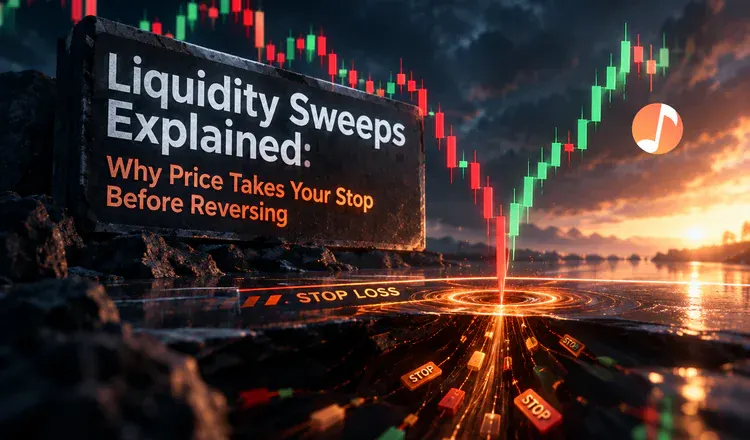
A liquidity sweep is a quick move that pushes price just past an obvious high or low, triggers the stop orders waiting there, and then turns back the other way. It happens because large orders need someone to trade against, and a crowd of stop-losses is the most dependable supply of that on the whole chart. Your stop was not singled out. It was standing in the crowd.
What is actually being swept?
Orders, not price. Picture a bus that pulls into a stop it was never going to finish at, purely to pick up passengers, then carries on where it was always heading. Beneath a well-known bitcoin low sit thousands of stop-losses, and every one of them is an instruction to sell at market. Touch that level and they all fire together. For a few seconds there is real selling for a large buyer to absorb, which is exactly what they came for.
Why the reversal comes so fast
Because the stops were the point of the trip. Once they have been triggered and bought, the selling is used up and there is nothing left underneath to push price lower. What remains is a long wick, a close back inside the old range, and a market that often travels further in an hour than it did all morning. Ether does this several times a month around round numbers and the previous day's low.
Sweep or real breakdown?
Watch the close, not the poke. A sweep is fast, leaves a long tail on the candle, and closes back above the level within a candle or two, usually on a spike in volume. A genuine breakdown is slower, and price stays below the level, retesting it from underneath instead of snapping back. If you cannot tell within two candles, you do not have to decide: staying out is a position too.
One practical warning. The wrong response to all this is trading without a stop, which swaps a small known loss for an open-ended one. Change the placement instead: put the stop beyond where a sweep would plausibly reach rather than a few cents past the obvious level, and cut your size so the wider stop risks the same money. More on the mechanics in why price reverses after hitting your stop loss, and on the market-wide version in stop hunts and liquidity.