
Is It Safe to Use Crypto on Public Wi-Fi?
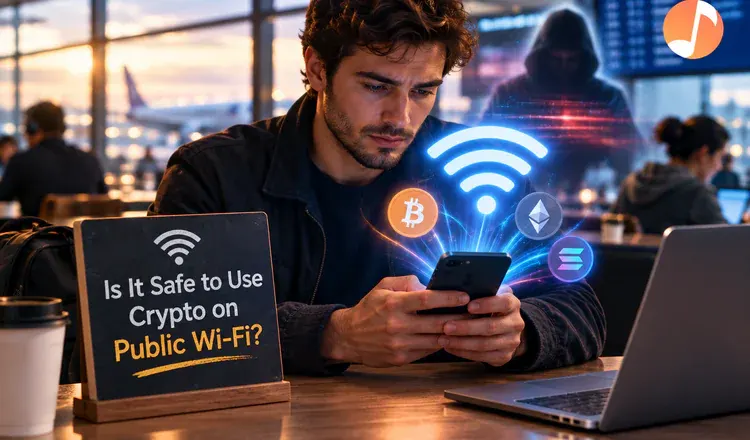
Mostly, yes — but not for the reason people expect. Public Wi-Fi is safer than its reputation, because almost every site and wallet app today encrypts what it sends, so the network itself cannot read your exchange password or watch your balance. The real danger on an open network is not eavesdropping. It is being pushed towards a fake version of the thing you were trying to use, and the people around you.
What can actually go wrong on an open network?
Three things, in order of how often they happen. Someone sets up a hotspot named after the cafe you are sitting in, and everything you type goes through their laptop first, which lets them serve you a convincing copy of a login page. The network's sign-in page tells you an update is required and hands you a file that is really malware — often the kind that silently swaps a copied wallet address for the attacker's, which our guide to clipboard malware explains. Or, simplest of all, the person behind you watches you type.
What should you never do on public Wi-Fi?
Never type your seed phrase. Not into a website, not into a support chat, not into a phone note. A real wallet such as MetaMask asks for it when you are restoring it and at no other time, and the one rule of crypto holds everywhere, but especially somewhere strangers can see your screen. Avoid installing anything a network suggests, and avoid setting up a brand new wallet in a cafe.
What makes it safe enough?
Use your phone's own mobile data or personal hotspot for anything involving money — it costs a few pennies and removes the whole problem. Reach exchanges and wallets through your own bookmarks rather than a search result or a link. Keep two-factor authentication on an authenticator app. And if you hold a meaningful amount, a hardware wallet such as a Ledger shows the destination address on its own screen and needs a physical button press, so even a fully compromised laptop cannot move your coins without you.
The practical version: check a balance anywhere, but sign transactions on a network you control.