
How to Stop Revenge Trading After a Loss
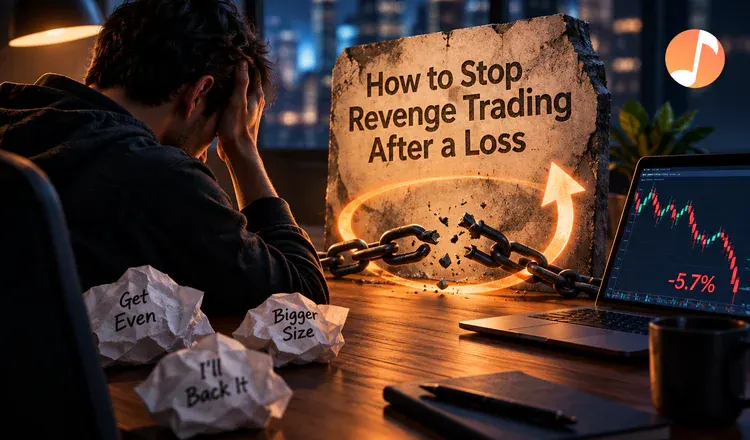
The way to stop revenge trading after a loss is to make the next trade harder to place, and to decide that before the loss ever happens. Willpower loses this fight almost every time, because the urge arrives in the first minutes after the stop hits, when you are least able to argue with yourself. Rules written in advance and a break you cannot skip do the work that calm intentions do not.
Set the limits while you are calm
Write down two numbers before the day starts: the most you will lose in a day, and the most trades you will take. When either is reached, the day is over, winning or losing. It works like a fire extinguisher — all of its value comes from being mounted on the wall before anything catches. Many traders use two or three percent of the account and three trades. The exact figures matter far less than the fact that you chose them in advance.
Put a gap between the loss and the next click
Crypto has no closing bell. On Binance or Bybit the position closes and the next one is two taps away at three in the morning, so the gap has to be built by hand:
- Stand up. Fifteen minutes away from the screen, with the app closed, defuses most of it.
- Lower your maximum leverage in the exchange's contract settings, so a much bigger bet is simply not offered.
- Keep less on the exchange. Hold the rest in a wallet you control, such as MetaMask or a Ledger. A transfer takes minutes, and those minutes are the point.
Write the loss down before you trade again
One line is enough: what the setup was, where the stop sat, and whether the loss came from following the plan or from breaking it. A loss that followed the plan is a cost of doing business and needs no revenge. A loss that came from breaking the plan is the one worth studying — later, after the session, not while the chart is still moving.
Start by naming the habit, because it is far easier to catch once it has a name: see what revenge trading is. And if the loss itself felt wrong rather than merely painful, check why a stop loss sometimes does not trigger as expected before blaming yourself for it. If the urge keeps winning even with hard limits in place, treat it as a gambling pattern rather than a skill gap — that is a different problem, and support for it exists.