
Are Crypto Recovery Services a Scam?
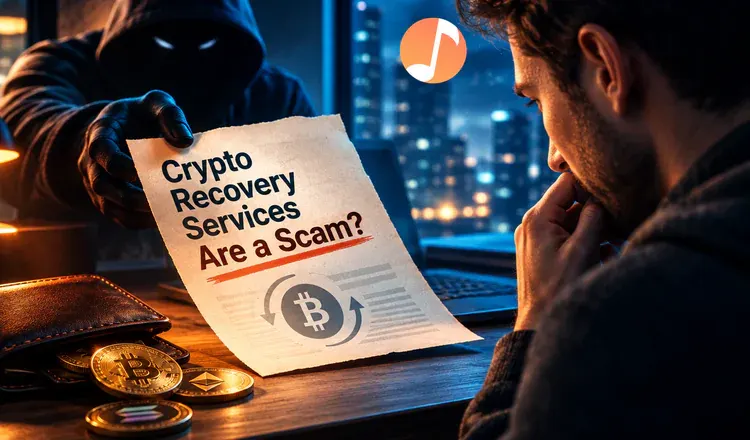
Almost always, yes. A crypto recovery service that promises to get your stolen coins back — especially one that contacted you first or wants a fee up front — is very likely a scam aimed at people who were just robbed. The FBI has warned about exactly this pattern for years. No private company can reverse a Bitcoin or Ethereum transaction.
Why do they seem so convincing?
Because they arrive when you are desperate. Picture a locksmith who shows up the morning after your burglary, says he can "trace" the thief, and asks for cash before he starts. That is the whole business model. The sites look professional, quote blockchain words like "forensic tracing" and "smart contract audit", and post glowing reviews that they wrote themselves.
Warning signs that settle it
- They found you — in a Reddit thread, an X reply or a direct message after you posted about your loss.
- They want payment before any result, often in crypto, often called a "fee", "tax" or "gas deposit".
- They guarantee success or name a percentage they are "sure" to recover.
- They claim to work with the FBI, Interpol, Binance or Coinbase.
- They ask for your seed phrase or ask you to install remote-access software.
Who can actually help?
Real blockchain investigators exist — firms like Chainalysis trace stolen funds — but they work for police, exchanges and courts, not for strangers who DM you. The honest route is slower and less exciting: a police report, a report to the FBI's IC3 or your national fraud centre, and a message to the exchange where your coins arrived. A lawyer can help with large losses, and a real one bills you openly and never promises a result.
If you are talking to a recovery service right now, stop paying and stop replying. Our guide to avoiding being scammed twice explains the scripts they use, and can I get my crypto back covers the few cases where money really does come back.