
8 Best Crypto Wallets for Security, Flexibility and Control
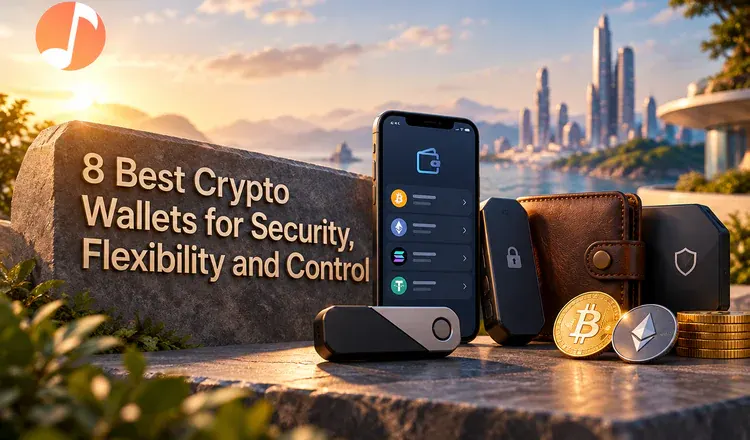
Security, flexibility and control pull against each other. The safest wallet is the one that makes you press a button on a separate device for every payment, which is also the least convenient. The most flexible is a free app that connects to anything in two taps, which is also the easiest to trick. These eight crypto wallets sit at different points on that line, and most people want two of them.
The eight, and what each is for
- Ledger - hardware. The broadest coin support, 15,000+ assets; about $79 to $399
- Trezor - hardware. Open-source firmware you can verify, split backups; from about $59
- MetaMask - free app. The default door into Ethereum apps, with Solana and Bitcoin accounts added
- Phantom - free app. The best Solana experience, plus Ethereum, Base, Polygon and Bitcoin
- Rabby - free app. Built for people juggling many networks; shows what a transaction will do before you sign
- Trust Wallet - free app. Mobile-first and covers an unusually wide list of chains
- Exodus - free app. The friendliest desktop wallet, with swaps built in
- Safe - shared wallet. Needs several people to approve a payment; what teams and large treasuries use
How should you combine them?
Treat it like cash and a bank. One free app holds what you are actively using - a few hundred dollars, say - and takes all the risk of clicking around. One hardware wallet holds everything else and barely ever comes out of the drawer. If several people share money, Safe replaces the single device, because no one person can move funds alone.
Two habits do more for your security than any choice on this list. Write the recovery words on paper, never in a photo, a notes app or an email draft. And when a site asks you to approve something you did not expect, close the tab instead of reading it twice - that moment of impatience is how most wallets get emptied. Next: best crypto wallets in 2026 and Ledger vs Phantom.