
🛡️ How Not to Lose Money in Crypto: A Security Checklist for 2026
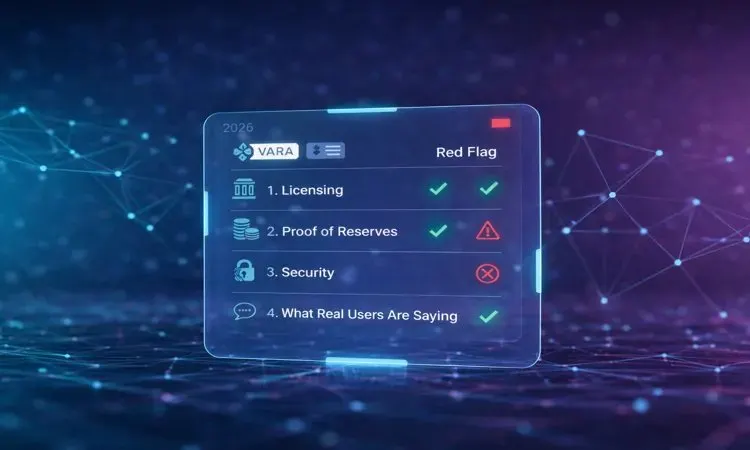
This checklist takes 5 minutes — but it can save your funds for years.
Let’s be honest.
Scams in 2026 don’t look like cheap phishing links anymore.
Now they build polished websites, add fake “licenses” in the footer, and sometimes even show you a “CEO” on video.
Everything looks legit… until it isn’t.
One day you log in — and your money is gone.
I’ve been in crypto for over seven years.
I’ve lived through multiple crashes and watched “top-tier” platforms disappear overnight.
That’s why I run the same checklist before connecting a wallet or sending funds anywhere.
No checklist — no deposit.
💡 Looking for full protection? > This checklist covers exchanges. Once you move your funds to a private wallet, you need a different strategy. Check out our Self-Custody Guide 2026: How to Secure Your Private Wallet.
🏛️ 1. Licensing
Don’t trust license badges in the footer. Seriously.
If a platform claims regulation, verify it yourself:
-
EU → check the official ESMA registry
-
Dubai → look it up via VARA
-
Any other jurisdiction → search the company on the regulator’s website
🚩 Red Flags
-
“In-Principle” approval that lasts for years
-
the licensed entity name doesn’t match the Terms of Service
-
offshore paperwork, while pretending to operate from Dubai
Example: In January 2026, a well-known platform with VARA in-principle status suddenly disappeared from the registry.
Withdrawals froze. Support went silent.
💰 2. Proof of Reserves
If a platform shows “100% reserves” but half of it is their own token, that’s not a reserve — it’s decoration.
Here’s what I check:
-
on-chain wallets via Nansen / Arkham / DefiLlama
-
whether they publish a real Merkle Tree
-
if users can verify reserves independently, not just “trust the numbers”
In 2025, several projects posted clean reports…
until it turned out most reserves were frozen insider tokens.
🔐 3. Security
It’s 2026, and some platforms still rely only on SMS 2FA.
That’s an instant no.
A serious exchange should offer:
-
Passkeys or hardware security keys
-
withdrawal address whitelisting (with a delay)
-
at least 90–95% of funds stored in cold wallets
If these basics aren’t there, don’t risk your funds.
🗣️ 4. What Real Users Are Saying
This is one of the most honest signals.
Anyone can fake licenses.
Anyone can run ads.
But if withdrawals don’t work — users will talk.
Before trusting any platform, I search X and Reddit for recent complaints.
Just insert the platform name:
-
“platform withdrawals frozen”
-
“platform KYC taking months”
-
“platform support not responding”
If the same stories keep repeating, I’m out.
Marketing can be bought.
User frustration can’t be hidden.
⚡ Quick 5-Minute Checklist
| What to Check | Green Flag | Red Flag | 5-Minute Test |
|---|---|---|---|
| License | Listed in an official registry | “In-Principle” forever, anonymous owners | Regulator website |
| Withdrawals | Working even during volatility | Constant “maintenance” | Search X (last 30 days) |
| Team | Real people with history | Anonymous profiles | LinkedIn scan |
| Transparency | Live PoR + Merkle Tree | “Just trust us” | Compare on-chain vs site |
| Reviews | Balanced feedback | Mass withdrawal complaints | Last 50–100 mentions |
🎯 Final Thoughts
I don’t trust glossy marketing or “we’re fully safe” claims.
I trust on-chain data — and what real users are experiencing.
Save this checklist.
It has saved my funds more than once.
💛 Stay With Us
If you want more breakdowns like this, follow us on social media.
We regularly review platforms, discuss risks, and share what truly matters.
Crypto-Jazz — making crypto a little clearer and a lot safer.