
Bitcoin Falls 20,000 Below Mining Cost: What It Means for the Market – An Editorial by Jazzman
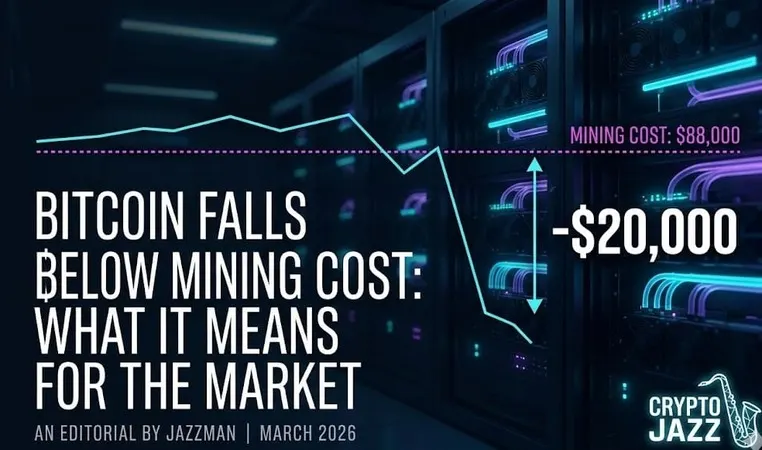
To put it simply: the situation is serious, but not catastrophic. On the morning of March 23, the price of Bitcoin dropped below 68,000. Meanwhile, the average cost to mine a single coin, according to data from Checkonchain, stands at around 88,000. The gap is 20,000.
That means miners are currently operating at a loss. Every Bitcoin they mine costs more than what they can sell it for. This already happened earlier this year, but in March the gap has only widened. Let’s take a closer look at what’s going on and why it matters for anyone following the market.
What the Numbers Say
Let me start with the main point: mining cost is not an abstract figure. It includes electricity, hardware, cooling, and facility rent. In mid-March, the average across the industry reached 88,000. The price, meanwhile, fell below 68,000.
This kind of divergence cannot last long. The market is starting to adjust.
-
Hash Rate: Since September of last year, it consistently stayed above 1,000 EH/s. Now the weekly average has fallen to 968 EH/s. That means some equipment has been switched off — not everyone is willing to operate at a loss.
-
Difficulty Adjustment: On March 21, difficulty dropped by 7.76%, to 133.79 T. This is the second-largest difficulty decline this year. Looking at the trend, difficulty is now 10% lower than at the start of the year and nearly 15% below the all‑time high of 156 T recorded in November 2025.
The key takeaway is this: the Bitcoin network is self‑regulating. When miners leave, difficulty drops, and mining becomes more viable again for those who remain.
What Miners Are Doing Right Now
I’ve been watching this market for a long time, and the current situation is forcing companies to rethink their strategies. There are two trends I consider particularly important:
-
Selling: Miners are selling their mined coins more aggressively than before. They need to cover operating expenses, and in this environment, Bitcoin itself is their only source of liquidity. This adds extra supply to the market and could put pressure on prices in the short term.
-
Diversification: Many mining companies are shifting part of their capacity to Artificial Intelligence (AI) and high‑performance computing. Previously, they had a single source of revenue: mining Bitcoin. Now they are leasing out computing power for AI‑related tasks. The revenue there is more predictable and doesn’t depend on crypto market volatility.
VanEck has called this a “gold mine.” I wouldn’t put it quite so dramatically, but the fact remains: companies that manage to adapt gain an extra layer of stability.
My Take
Now for the editorial side. Here at Crypto Jazz, I always try to speak plainly, without twisting reality to fit expectations.
Yes, the situation is tough. When price falls below mining cost, it’s always a cause for concern. But I don’t see this as a sign of collapse. Rather, it’s another stage in the industry’s maturation. Those who miscalculated their risks are being pushed out. Those who know how to adapt stay.
For those of us looking at the market not as speculators but as people evaluating long‑term prospects, this is more of a reason to pay attention to how things are changing than a reason to panic.
Stay in the Loop
I’ll be keeping an eye on how the situation develops. In crypto, things change fast, and often the most important moves happen during periods like this — when most people are looking the other way.
If you want to get timely updates and stay connected with the editorial team, subscribe to our Telegram channel. There I share things that don’t always make it into the longer articles — quick notes, personal observations, and reactions as events unfold.
Stay with Crypto Jazz. We don’t hype panic, but we don’t pretend nothing is happening either. Just straightforward market analysis.